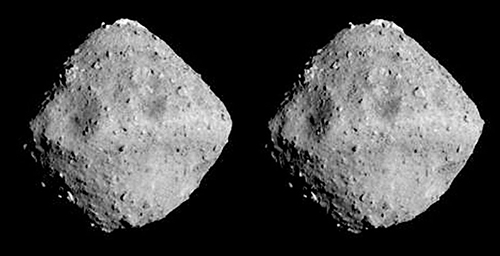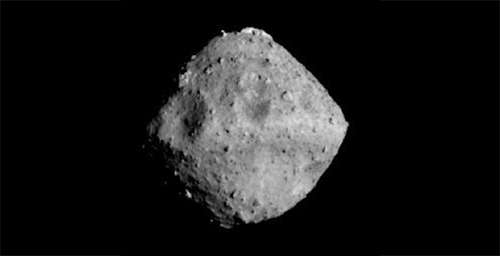


On 6 December 2020, the Hayabusa2 asteroid explorer delivered a capsule containing samples from asteroid Ryugu to Earth. The spacecraft then returned to deep space to embark on the Hayabusa2 Extended Mission (Hayabusa2#). The next mission objectives are to conduct a flyby of asteroid Torifune in 2026, followed by a rendezvous with asteroid 1998 KY26 in 2031.
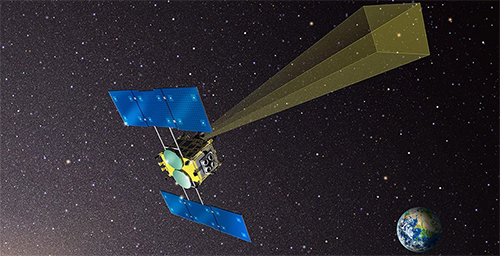
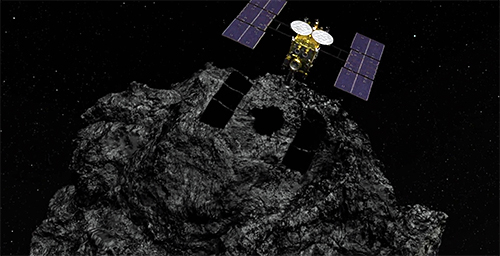
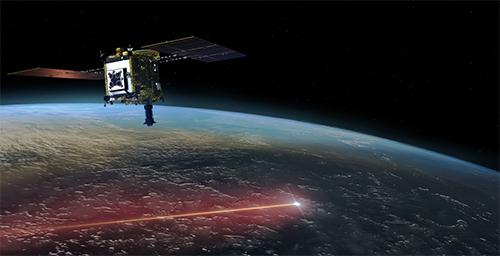
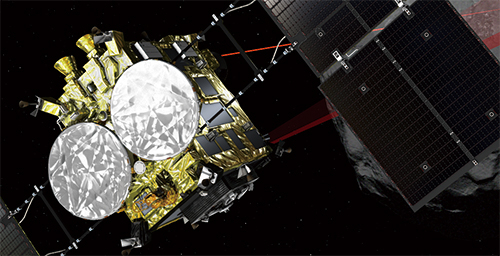
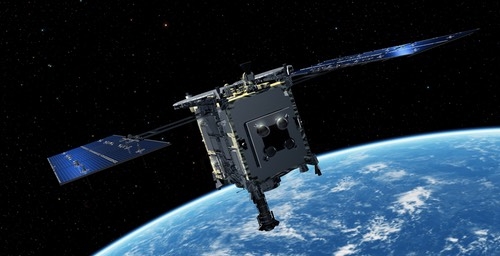
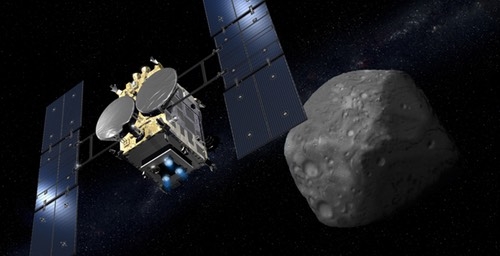
There are now only about six months remaining until the Torifune flyby. Based on current orbital operation status, the flyby date―when Hayabusa2 will make its closest approach to Torifune―will be 5 July 2026. The spacecraft will pass by Torifune at a relative velocity of approximately 5 km/s. As Hayabusa2 approaches Torifune, the spacecraft will conduct observations using the onboard instruments (see Figure 1).

Figure 1: Artist impression of Hayabusa2 flying past asteroid Torifune (© Ikeshita Akihiro).
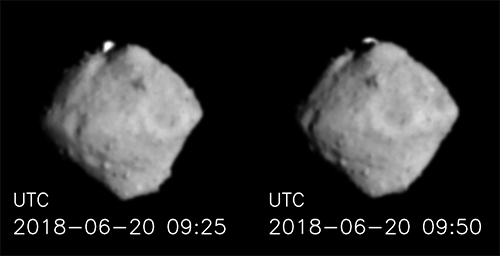
The time of the flyby has not yet been determined. The exact timing will depend on the future operation status of the spacecraft, but will also take into account the scientific observations. Because flyby explorations are over in an instant, we are considering which side of Torifune to observe to obtain the best data. Torifune's rotation period is approximately five hours, so adjusting the time slightly will provide a view of a different side of the asteroid.
Another important consideration is the selection of the ground station to use for communication with the spacecraft. We typically communicate with Hayabusa2 via ground stations in Japan, such as the Usuda Deep Space Center and the Misasa Deep Space Station. However during critical operations, we also utilize the US ground stations in countries such as the USA, Australia, and Spain. The choice for the ground station during, before and after the flyby is also a crucial factor in determine the timing. We will announce the flyby time as the date approaches!
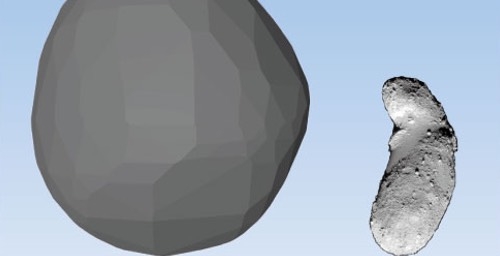
The distance from the spacecraft is also an important factor during a flyby (Figure 2). Hayabusa2 is a spacecraft for rendezvous missions. That is, the spacecraft design was for enabling detailed observations in the vicinity of an asteroid. This means that Hayabusa2 will not be able to obtain high-quality data unless it can approach the asteroid as close as possible. Spacecraft intended for flyby missions are typically equipped with devices such as telescopes that can obtain quality data at a distance, but Hayabusa2 was never outfitted with such instruments. Of course, getting too close and colliding with the asteroid would be disastrous, so the question is how close should the spacecraft approach? The team is currently considering whether it is possible to bring Hayabusa2 as close as around 1 km from the surface of Torifune. The size of Torifune is estimated to be about 450 m in average diameter, and there are indications that the shape may be elongated. Since both the size and shape of the asteroid are not yet fully understood, the approach distance must be very carefully considered.

Figure 2: Diagram explaining the different spacecraft operations based on differences in the distance for closest approach.
On Trajectory ①, a safe flyby is possible, but the distance is too far to obtain high-resolution data, and the spacecraft's attitude must be adjusted significantly during the approach. On Trajectory ③, the spacecraft can maintain the same orientation and approach very close, but would ultimately collide with the asteroid. Trajectory ② passes as close as possible to Torifune to allow high-resolution data to be collected without the need to make significant changes to the spacecraft attitude to keep the asteroid within view until just before the closest approach. But there is still a risk of collision if Hayabusa2 gets too close.
Passing as close as possible to an asteroid offers an additional advantage. As Hayabusa2 approaches Torifune, instruments such as the on-board cameras, must be directed at the asteroid. Since the cameras on Hayabusa2 are fixed, this is accomplished by adjusting the spacecraft's attitude (orientation). However, with Hayabusa2, it is not possible to make large adjustments to the attitude in a short period of time. If the closest approach distance is small, the target will remain within the spacecraft's camera view through the approach, even with no adjustments to the attitude. Of course, just before and after the closest approach, the spacecraft would need to swing around significantly to keep the asteroid within view. However, this phase will not be observed with Hayabusa2, and observations will be conducted only up to just before the closest approach.
As outlined above, the Torifune asteroid flyby mission is an attempt at a high-speed flyby using a spacecraft originally designed for rendezvous operations. Highly accurate orbital guidance (navigation) is particularly important when the spacecraft is at a small very close approach to Torifune. If the spacecraft can navigate with exceptional precision, it would even be possible to intentionally crash the spacecraft into a small asteroid. This is critically important technology for planetary defense (protecting the Earth). In 2022, NASA conducted an experiment in which a spacecraft called DART was intentionally crashed into an asteroid. The purpose was to determine to what extent the asteroid's orbit could be altered by the spacecraft's impact. If Hayabusa2 can be navigated with this kind of accuracy, Japan will also be able to contribute to the prevention of celestial bodies colliding with the Earth.
The Hayabusa2 flyby of asteroid Torifune aims to not only further planetary science through the study of a new asteroid, but also serves to support planetary defense. Please keep watching as we towards a close approach of Torifune on 5 July 2026.
Hayabusa2 Extended Mission Team

Reference figure: the Hayabusa2 Extended Mission Scenario