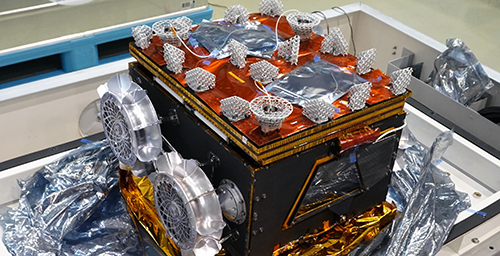


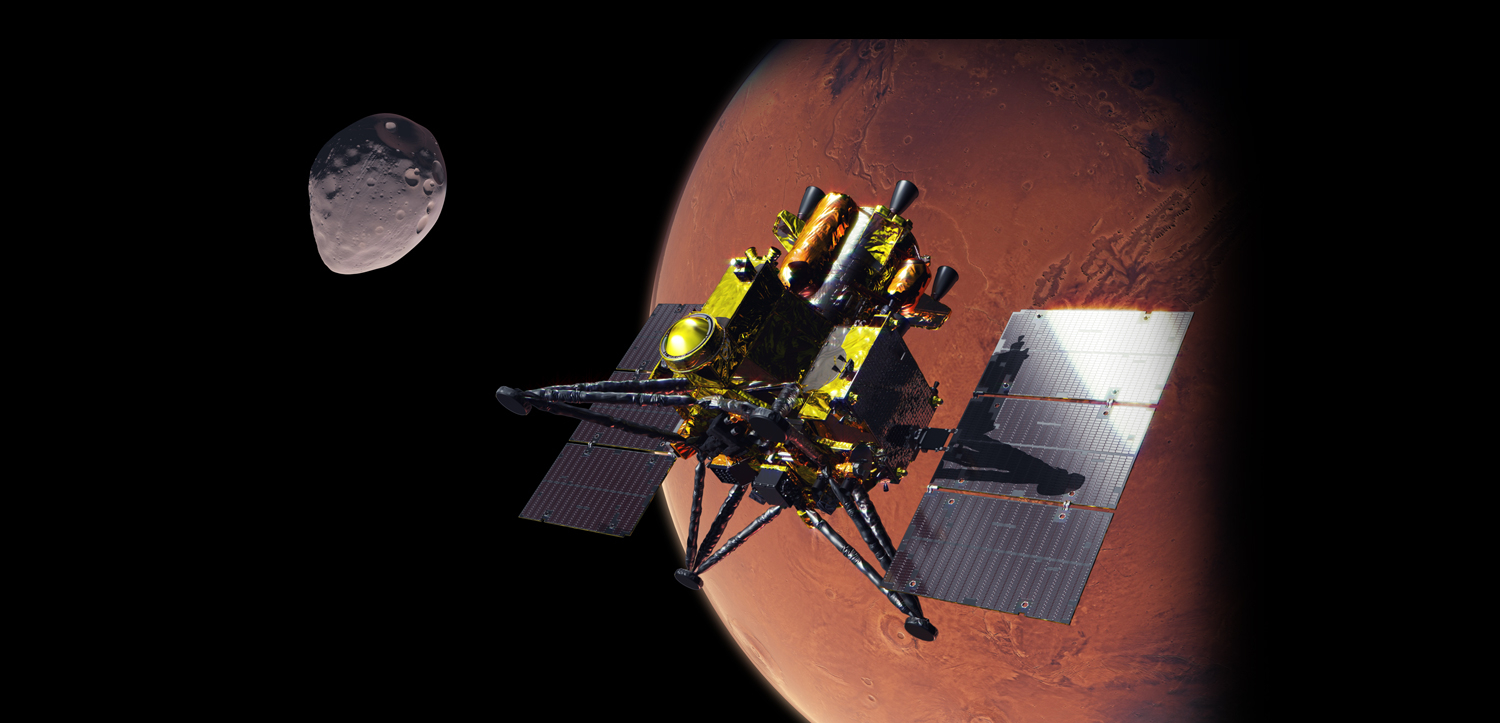

The MMX mission is currently undergoing full system tests for the spacecraft with the aim of launching in fiscal year 2026.
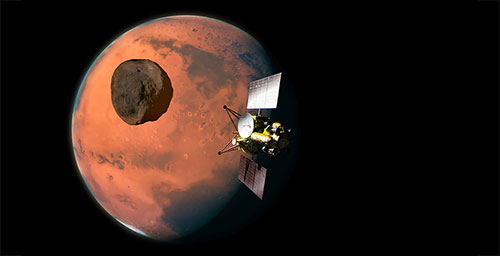
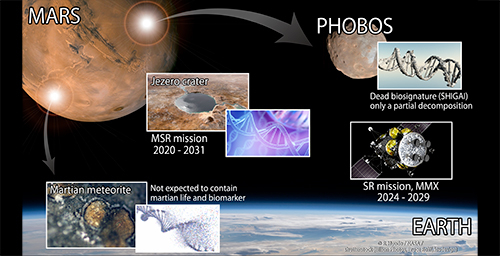
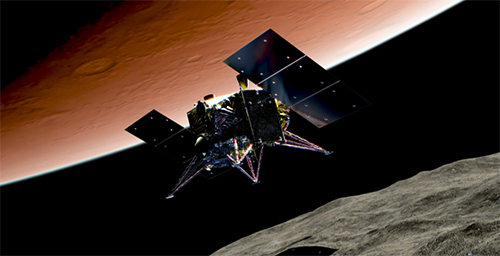
Mars has two moons called Phobos and Deimos. The probe will enter a quasi-satellite orbit (QSO) around Phobos and collect samples from this moon, as well as make observations of both Phobos and Deimos. After completing observations and sample collection, the spacecraft will return to Earth with the Martian moon samples.
The mission aims to clarify the origin of the Martian moons and the evolutionary process of the Mars system (Mars, Phobos, and Deimos), as well as explore how a habitable environment for life might have arisen on the terrestrial planets.
It is hoped that this research and development will lead to improvements in technology needed for future planetary and lunar probes, optimal communications technology using new ground-based probe stations, advanced sampling technology for the surface of astronomical objects, and technology for travel between Mars and the Earth.

| Name | Martian Moons eXploration (MMX) |
|---|---|
| Rationale and purpose of the development | ・Clarify the origin of the Martian moons, and explore the origins of life and habitable environments on terrestrial planets. ・Clarify the evolutionary process of the Mars system (Mars, Phobos, and Deimos). ・Acquire technology for the round-trip to and from the Mars system. ・Acquire advanced sampling technology for the surface of celestial bodies. ・Acquire optimal communication technology using a new ground station. |