

Summary
The Fe Kα fluorescence line emitted when cold gas is irradiated by high-energy X-rays has long been used as a powerful diagnostic to probe the distribution and physical state of matter surrounding X-ray sources such as black holes and neutron stars. Using XRISM, we have revealed for the first time that the Fe Kα line detected from the accretion-powered pulsar Centaurus X-3 originates not from neutral iron atoms, but from low-ionization iron ions in which approximately five electrons have been removed.
This discovery was made possible by the exceptional spectroscopic capability of the X-ray microcalorimeter Resolve onboard XRISM, which enabled the detection of both the Fe Kα and Fe Kβ lines and the measurement of their energies with an accuracy of about 1 eV. This study demonstrates a new approach in which macroscopic astrophysical phenomena serve as a "cosmic laboratory" to diagnose the microscopic electronic states of atoms. The result directly fulfills XRISM's "extra success" goal of acquiring observational data that advance new plasma physics research.
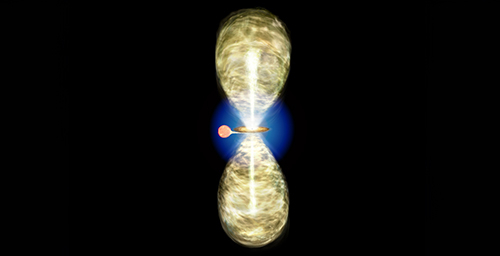
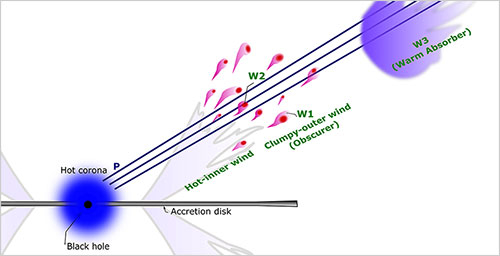
Figure 1: Overview of this study (Credit: JAXA)
Background
Iron (Fe), having the most stable atomic nucleus among all elements, is abundant in the Universe and is well known for efficiently producing fluorescence lines when exposed to intense X-rays (Figure 2). The Fe Kα fluorescence line at 6.4 keV (wavelength 1.94 Å) has therefore been widely used in X-ray astronomy to probe the environment around compact objects such as black holes and neutron stars. One of the key parameters in understanding such environments is the ionization state of iron, i.e., how many electrons have been stripped from the atom.
In general, the energy of emission lines changes as ionization progresses. For example, helium-like iron ions (with 24 electrons removed) emit Fe Kα lines at higher energies than neon-like ions (with 16 electrons removed). This is because the reduction in bound electrons decreases the screening of the nuclear charge, allowing the emitting electron to feel a stronger Coulomb attraction.
However, as shown in Figure 2 (left), for low-ionization iron ions (charge states from +2 to +8), the Fe Kα line energy slightly decreases as ionization increases. This counterintuitive behavior is related to the sequential removal of electrons from the so-called 3d orbitals (Figure 2). As the number of 3d electrons decreases, electron-electron repulsion weakens, causing the 3d orbital to contract toward the nucleus (Figure 2, lower right). As a result, the spatial overlap between the remaining 3d electrons and the inner 2p electrons increases, leading to a slight change in the nuclear attraction experienced by the 2p electrons. Since the Fe Kα line is emitted when a 2p electron transitions to the innermost 1s orbital, its energy is affected by this change.
The magnitude of this effect is small―at most about 4 eV―making it difficult to resolve with conventional X-ray instruments. Consequently, Fe Kα lines observed near 6.4 keV have often been assumed to originate from neutral iron. The Resolve instrument onboard XRISM achieves an unprecedented energy resolution (~4.5 eV) and energy accuracy (~0.1 eV) at 6.4 keV, enabling, for the first time, the identification of the ionization state of iron directly from fluorescence line energies.
Figure 2: (Left) Variation of fluorescence line energies as a function of the ionization state of iron, expressed as energy differences from neutral iron. (Credit: JAXA)
(Right, top) Probability density distributions of electron orbitals.
(Right, bottom) Contraction of the 3d orbitals as iron ions become ionized.
Methods and Results
XRISM observed the accreting X-ray pulsar Centaurus X-3, a binary system consisting of a blue supergiant and a neutron star (Figure 3), covering one full orbital period (~2 days). The observation was conducted during the Performance Verification (PV) phase in February 2024, and the first science results were published in December of the same year [1].
The earlier study showed that the Fe Kα line energy exhibits a sinusoidal Doppler shift corresponding to the neutron star's orbital motion (Figure 4). The amplitude of this modulation indicated that the Fe Kα emission originates near the surface of the companion star. However, the mean velocity offset of the line, reflecting the systemic line-of-sight velocity of the binary, was found to be about 100 km/s larger than that measured in optical observations, and the origin of this discrepancy remained unclear.

Figure 3: Schematic illustration of the accreting pulsar Centaurus X-3 (Credit: JAXA)

Figure 4: Orbital-phase variation of the Fe Kα line energy obtained from observations of Centaurus X-3. The vertical axis shows the energy difference from the fluorescence line energy of neutral iron in the rest frame. The green curve indicates the Doppler shift corresponding to the radial velocity measured from optical observations. (Credit: JAXA)
In the present study, we revisited the data by considering the ionization effects described above. While the previous work assumed neutral iron, the emitting gas is expected to be mildly ionized due to ultraviolet radiation from the supergiant and X-rays from the neutron star. As noted earlier, low-ionization iron emits Fe Kα lines that are lower in energy by about 1-4 eV compared to neutral iron. Around 6.4 keV, a 1 eV shift corresponds to a line-of-sight velocity of roughly 50 km/s, sufficient to explain the discrepancy with optical measurements.
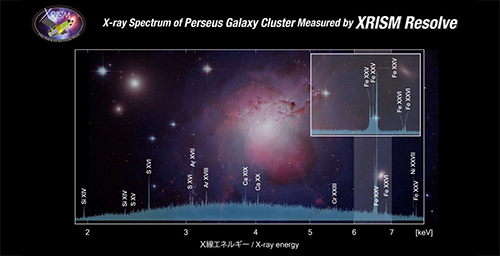
However, the Fe Kα line alone cannot disentangle Doppler shifts from ionization effects. Therefore, we focused on the Fe Kβ line detected alongside Fe Kα (Figure 5). The Fe Kβ line is emitted when a 3p electron fills a vacancy in the 1s orbital and has an intensity about 10% of the Fe Kα line. Unlike Fe Kα, the Fe Kβ line energy increases monotonically with ionization. Thus, for low-ionization states (+2 to +8), the energy difference between Fe Kα and Fe Kβ lines serves as a robust diagnostic of the ionization state.
Applying this method to Centaurus X-3, we found that the average ionization state of iron is approximately +5. Correcting the Doppler analysis using this ionization state, we confirmed that the line-of-sight velocity derived from the Fe Kα line is consistent, within uncertainties, with optical measurements.
Figure 5: Spectrum of Centaurus X-3 obtained with Resolve (Credit: JAXA)
Implications and Future Prospects
One of XRISM's "extra success" goals is to obtain observational data that contribute to new developments in plasma physics. This result clearly demonstrates the achievement of that goal.
Low-ionization Fe fluorescence lines, as studied here, are observed not only in neutron stars but also in white dwarfs, black holes, molecular clouds, supernova remnants, and many other objects. The method proposed in this study can be applied to a wide range of astrophysical objects, enabling detailed diagnostics of extreme environments characterized by strong gravity and magnetic fields. It is expected to become a foundational technique in the era of high-resolution X-ray spectroscopy.
Reference
[1] Mochizuki et al., 2024, Astrophysical Journal Letters, 977, L21
Publication Information
Title : Energy shift of Fe-K fluorescence lines due to low ionization demonstrated with XRISM in Centaurus X-3
Authors : Yutaro Nagai, Teruaki Enoto, Masahiro Tsujimoto, Hiroya Yamaguchi, Yuto Mochizuki, Ehud Behar, Lia Corrales, Paul A. Draghis, Ken Ebisawa, Natalie Hell, Timothy R. Kallman, Richard L. Kelley, Pragati Pradhan, Shinya Yamada, Toshiyuki Azuma, Xiao-Min Tong
Journal : Publications of the Astronomical Society of Japan
DOI : 10.1093/pasj/psag015