

Key Points
- XRISM has precisely measured the motion of hot gas within the Perseus Cluster, the brightest galaxy cluster in the X-ray sky.
- For the first time, observations have clearly distinguished two distinct types of gas motion: one driven by the central supermassive black hole, and another associated with the dark matter-dominated growth of the cluster.
- The smaller-scale turbulence generated by the black hole stirs and heats the surrounding gas, providing direct evidence of how black hole activity can regulate star formation and influence galaxy evolution.
Main Text
Galaxy clusters are the largest gravitationally bound structures in the Universe. They form through the gradual accumulation of matter under gravity, dominated by invisible dark matter. While dark energy drives the overall expansion of the Universe, gravity continues to assemble matter locally into galaxies and clusters of galaxies. Over billions of years, this process has built enormous systems spanning millions of light-years and containing hundreds of galaxies.
Most of the ordinary matter in a galaxy cluster does not reside in stars, but in an extremely hot, diffuse plasma that fills the space between galaxies. This gas reaches temperatures of tens of millions of degrees―more than 5,000 times hotter than the surface of the Sun―and emits strongly in X-rays. At the center of many clusters lies a giant galaxy hosting a supermassive black hole with mass millions to billions of times that of the Sun. Understanding how gravity, dark matter, and black hole activity shape the motions of this hot gas is essential for revealing how clusters grow and how galaxies evolve within them.
The Perseus Cluster, located about 240 million light-years from Earth, is the brightest galaxy cluster in X-rays. Because of its brightness, it has long served as a key laboratory for studying the physics of hot cluster gas. Previous observations suggested that the gas was not stationary but in motion, stirred by both large-scale cluster growth and energetic outbursts from the central black hole. However, separating these different sources of motion observationally had remained a major challenge.
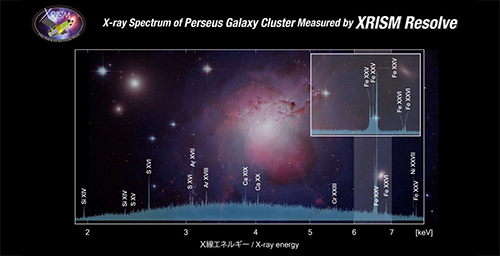
Hot gas contains heavy elements such as iron that emit X-rays at very specific energies. If the gas moves toward or away from us, the energies of these X-ray photons (spectral emission lines) shift slightly due to the Doppler effect―the same phenomenon that causes a siren's pitch to rise and fall as it speeds past. Measuring such tiny shifts requires extremely high spectral resolution.

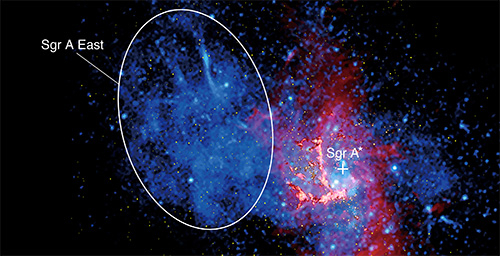
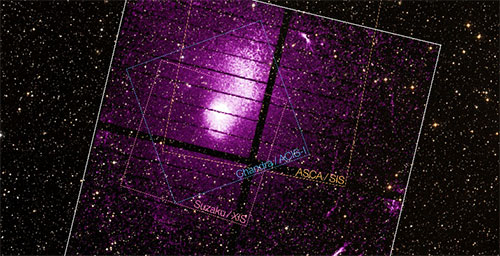
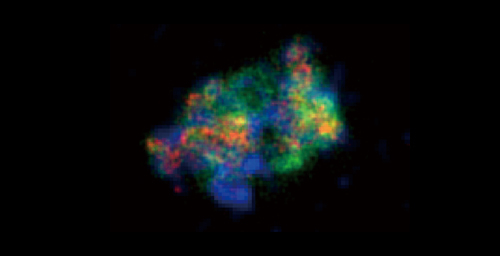
Figure 1: The region observed by XRISM and the gas motions revealed by these observations. (Credit: JAXA)
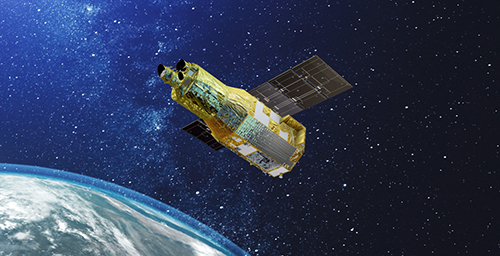
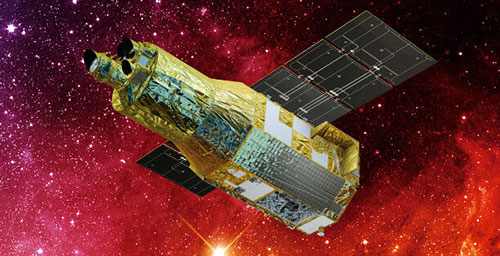
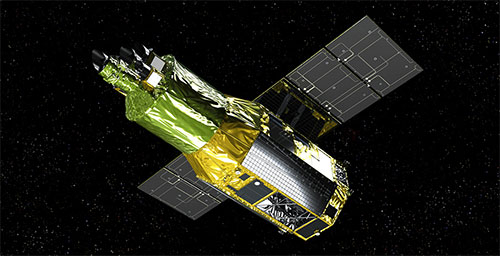
The X-Ray Imaging and Spectroscopy Mission (XRISM) is equipped with a high-resolution X-ray microcalorimeter, Resolve, capable of measuring photon energies with unprecedented precision. By analyzing the Doppler shifts of iron emission lines across a wide region of the cluster, the team mapped the velocity distribution of the gas out to nearly 800,000 light-years from the center.
XRISM builds upon the legacy of its predecessor, ASTRO-H (Hitomi), which in 2016 achieved the first direct measurement of gas turbulence in the central region of Perseus. Although ASTRO-H's mission ended prematurely, it demonstrated the transformative potential of high-resolution X-ray spectroscopy. XRISM now extends those measurements over a much larger area, revealing the cluster's velocity structure in detail.
The observations reveal a distinctive V-shaped pattern in the line-of-sight velocity dispersion. Near the cluster center, close to the supermassive black hole in the galaxy NGC 1275, the velocity spread reaches about 200 kilometers per second―approximately 35 percent of the sound speed in the hot gas. Moving outward, the velocity dispersion decreases to roughly 80 kilometers per second before increasing again to nearly 200 kilometers per second in the outer regions.
This pattern indicates the presence of two physically distinct drivers of motion.
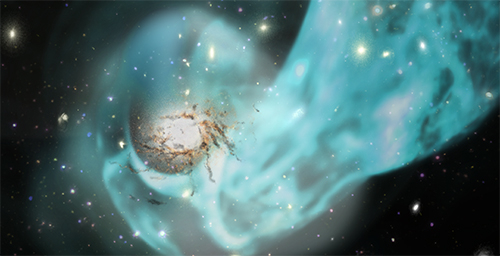
The larger-scale gas motions observed in the outer parts of the cluster are consistent with flows generated by the cluster's continued growth. As dark matter pulls surrounding matter inward along cosmic filaments, the infalling material stirs the hot plasma, producing broad, cluster-wide motions. These flows provide direct evidence that the Perseus Cluster remains dynamically active and continues to accrete matter.
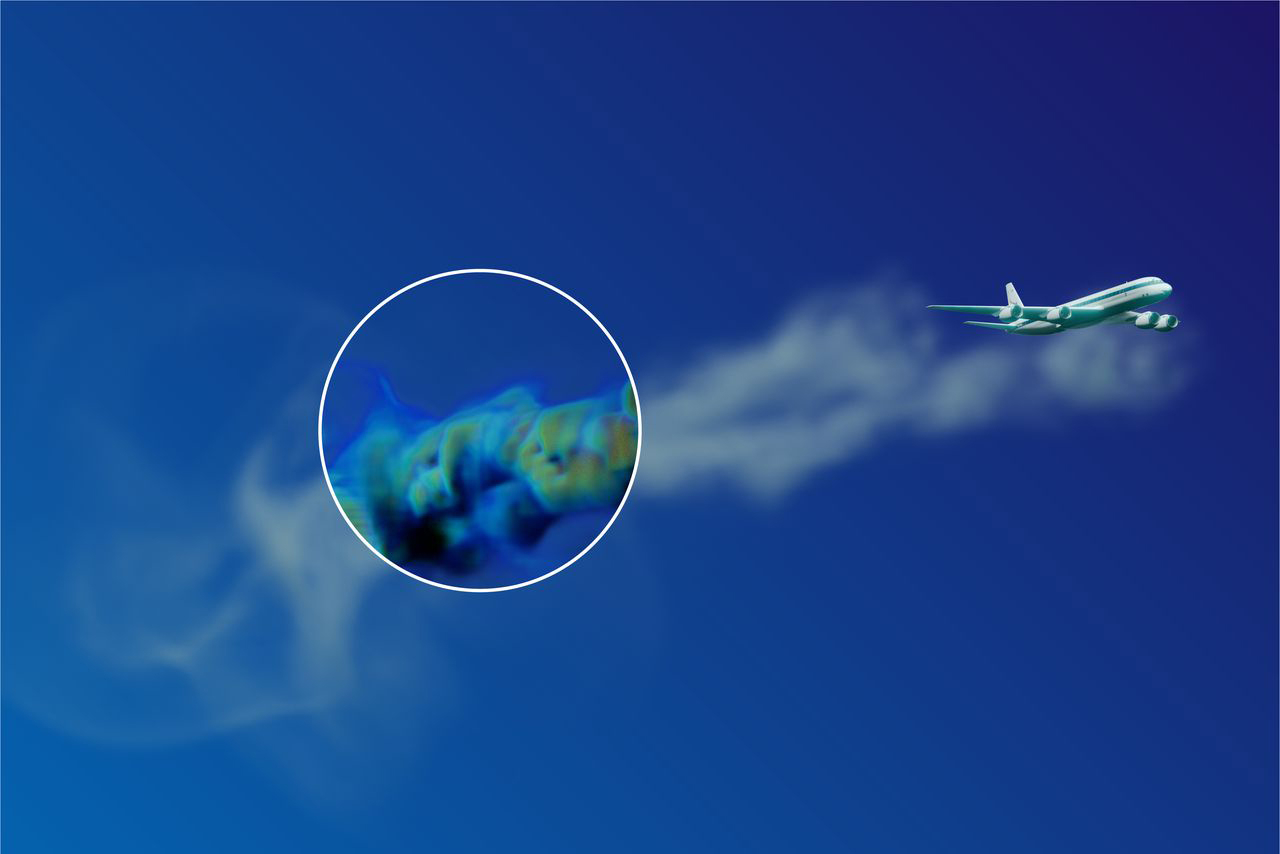
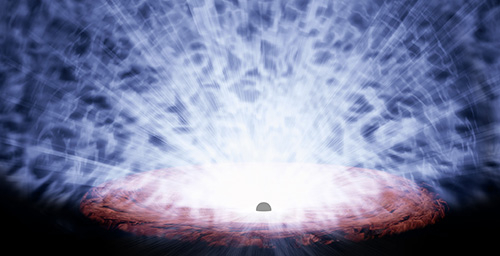
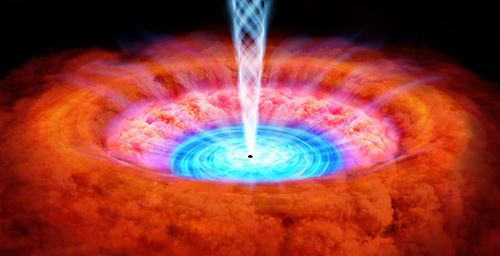
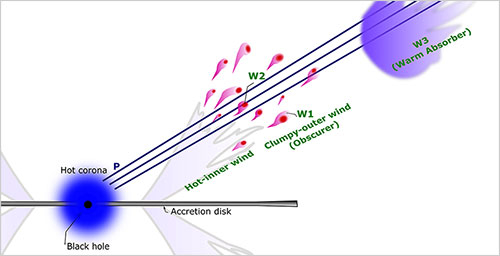
Figure 2: An example of turbulence (Credit: JAXA)
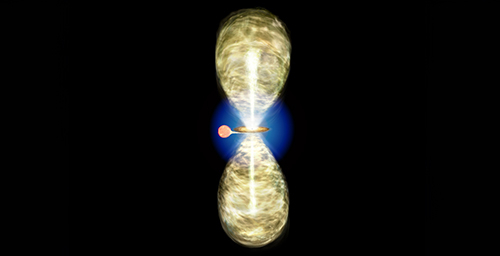
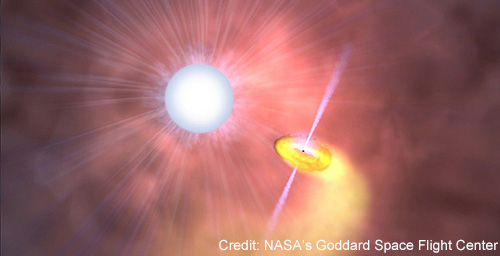
In contrast, the enhanced turbulence observed near the center is most naturally explained by energy input from the supermassive black hole. The black hole in NGC 1275 is estimated to be roughly 200 times more massive than Sagittarius A*, the black hole at the center of our Milky Way. While black holes are often described as objects that consume surrounding matter, they also release enormous amounts of energy as gas falls toward them. Powerful jets and outflows inflate cavities in the surrounding hot gas and inject energy into the cluster core.
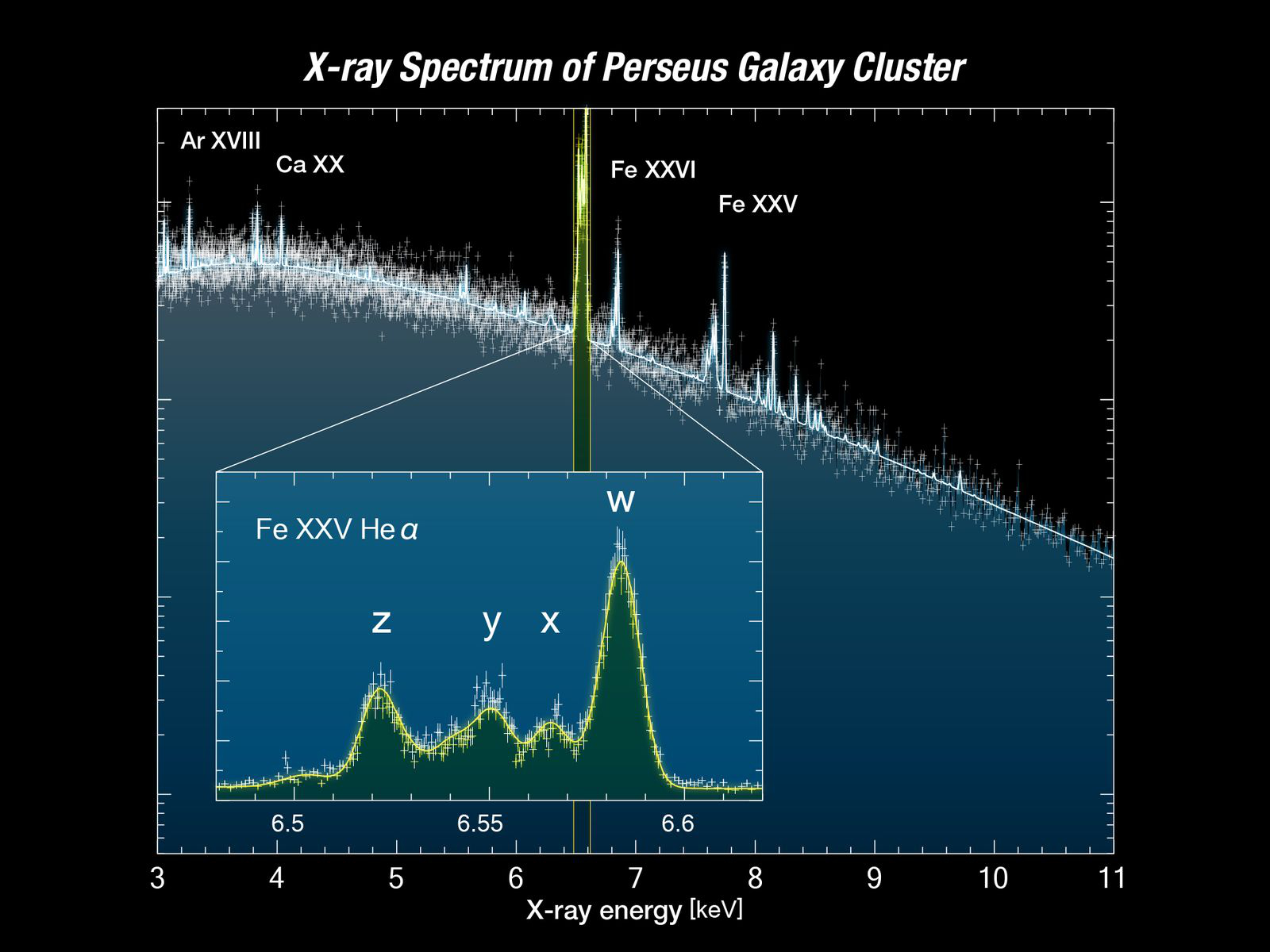
Figure 3: Spectrum of the central region of the Perseus galaxy cluster observed with Resolve, the soft X-ray spectrometer aboard XRISM (Credit: JAXA)
XRISM's measurements provide direct dynamical evidence that this black hole activity drives turbulence in the central region. The observed velocity dispersion demonstrates that the black hole is actively stirring and heating the surrounding plasma.
The ability to distinguish between large-scale motions associated with cluster growth and smaller-scale turbulence generated by black hole feedback marks a significant advance. It confirms long-standing theoretical predictions that galaxy clusters are shaped by the combined influence of cosmological accretion and central black hole activity.
These findings have important implications for understanding galaxy evolution. Star formation requires cold gas. In massive galaxy clusters, however, most gas remains extremely hot. Energy injected by supermassive black holes can prevent gas from cooling efficiently, thereby suppressing the formation of new stars. Observations of turbulence in the cluster core provide direct evidence that black hole feedback plays an ongoing role in regulating the thermal state of the gas.
By mapping gas motions with high precision, XRISM opens a new observational window onto the dynamic processes operating within galaxy clusters. Rather than static reservoirs of hot plasma, clusters emerge as evolving systems shaped by continuous matter accretion and episodic energy release from their central black holes.
As XRISM continues its mission, similar measurements in additional clusters will further clarify how dark matter-driven growth and black hole feedback together govern the evolution of the largest bound structures in the Universe.
Publication Information
Title : Disentangling Multiple Gas Kinematic Drivers in the Perseus Galaxy Cluster
Journal : Nature
Authors : XRISM Collaboration
DOI : 10.1038/s41586-025-10017-x