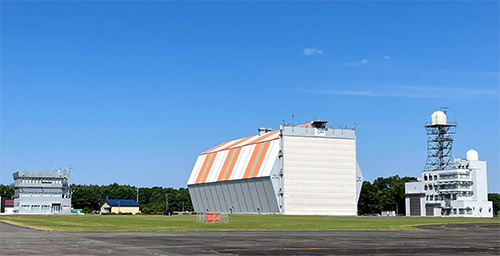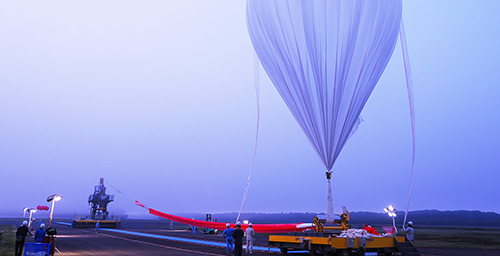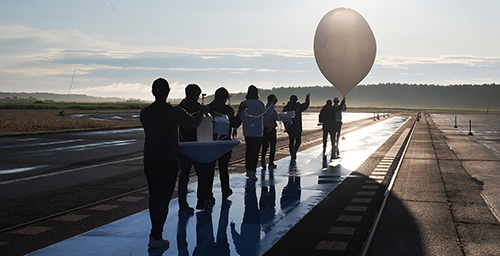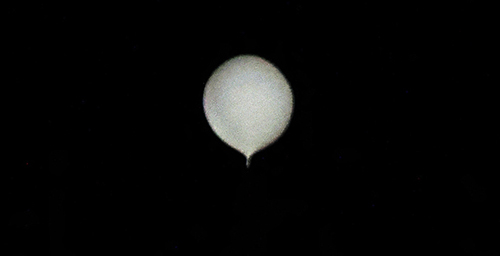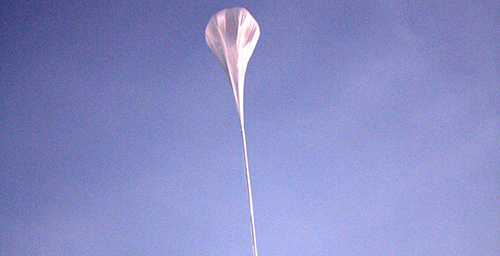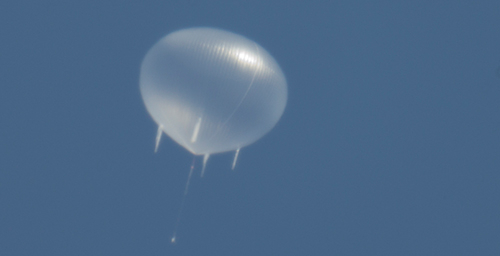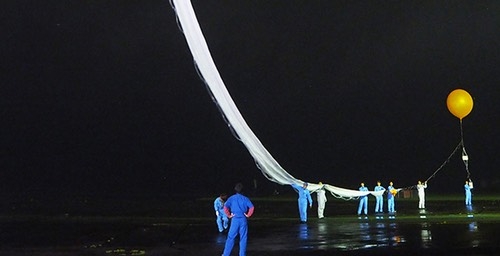


The Japan Aerospace Exploration Agency (JAXA) conducted the scientific balloon flight B26-02, as part of the 2026 scientific balloon campaign, at the Taiki Aerospace Research Field. The balloon was launched on 14 June 2026, at 3:50 am JST for the purpose of testing the performance of a model for balloon-borne very long baseline interferometry (VLBI). The polyethylene balloon had a fully inflated volume of 30,000 m3 (diameter 42 m) and ascended at a rate of approximately 280 m per minute.
1 hours and 33 minutes after launch, the balloon reached its floating altitude of 26 km over the Pacific Ocean, approximately 50 km east-southeast from the Taiki Aerospace Research Field. At 6:34 am JST, the balloon and the onboard equipment were separated by tele-command and slowly descended onto the sea, landing approximately 30 km south-east from the Taiki Aerospace Research Field, where they were recovered by recovery boats at 7:27 am JST.
Regarding the balloon-borne VLBI experiment, further research will now be conducted through the thorough analysis of the data obtained in this flight.
At the time of launch, the ground weather conditions were: weather: cloudy, wind speed: 1 m/s, and temperature: 10 degrees Celsius.
※ Research overview
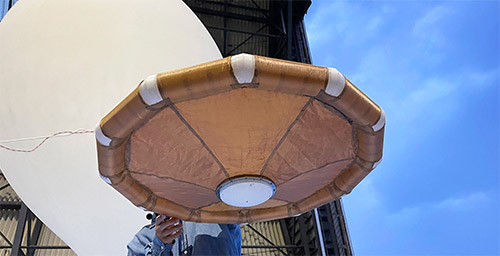
This balloon-borne VLBI experiment is a feasibility study flying a prototype radio telescope for a future VLBI mission utilising balloon. The experiment will conduct observations at the highest possible frequency band for the interference (20 GHz) between a balloon-borne platform and ground-based telescopes in order to test key technologies necessary to realise a future balloon-borne VLBI at submillimeter band (> 300 GHz). Specifically, technical challenges such as the frequency stability of the standard source and precision of the position determination, which have either no precedent in past balloon missions and are difficult to validate on the ground, will be tested using the radio telescope prototype.

A balloon being inflated in a large hangar for its scientific flight B26-02. (credit: JAXA)