



[ 日本語 ]
(Photo above) Adelaide in early summer in the Southern Hemisphere, with purple jacaranda trees in full bloom.
In December 2025, Tsuda Yuichi, Deputy Director of the Institute of Space and Astronautical Science (ISAS), visited Australia. This visit coincided with what might be called "Hayabusa2 Week": The Hayabusa2 mission was launched from Tanegashima Space Center on December 3, 2014, and the capsule carrying samples from asteroid Ryugu returned to Earth, landing in the Woomera Desert, on December 6, 2020. At this symbolic milestone, the visit to Australia provided an opportunity to reflect on the journey of the Hayabusa2 mission, while also looking ahead to the current state of Japan-Australia cooperation in space science and exploration in the era of the upcoming Martian Moons eXploration (MMX) mission.
In particular, 2026 will mark the 50th anniversary of both the signing of the Japan-Australia Basic Treaty of Friendship and Cooperation and the establishment of the Australia-Japan Foundation. To commemorate this milestone, a series of meaningful events and activities are planned in both countries to celebrate the relationship built over the past half-century and to further promote cooperation and mutual understanding between Japan and Australia.
Under the summer blue skies of the Southern Hemisphere, and beneath the Southern Cross that appear as night falls, the conversations exchanged were more than formal visits or ceremonies. They stood as an extension of trust and collaboration patiently built over many years ― a journey that celebrated the past while quietly reaffirming a shared commitment to the future.
Adelaide | Dialogue on Japan-Australia Space Cooperation
Deputy Director Tsuda visited the South Australian Space Industry Centre (SASIC) in Adelaide, together with Japanese members who support the promotion of Japan-Australia international cooperation and the activities of the Australia-Japan Foundation. There, they met with Campbell Pegg, Space Director of SASIC. The Woomera Desert, where the Hayabusa2 capsule landed, is located in South Australia.
Mr. Pegg introduced South Australia's initiatives to strengthen its space industry. In response, Deputy Director Tsuda and other Japanese participants engaged in active discussions on Japan-Australia cooperation in space science in anticipation of the MMX mission, as well as on collaboration to promote industry and entrepreneurship through space-related activities.
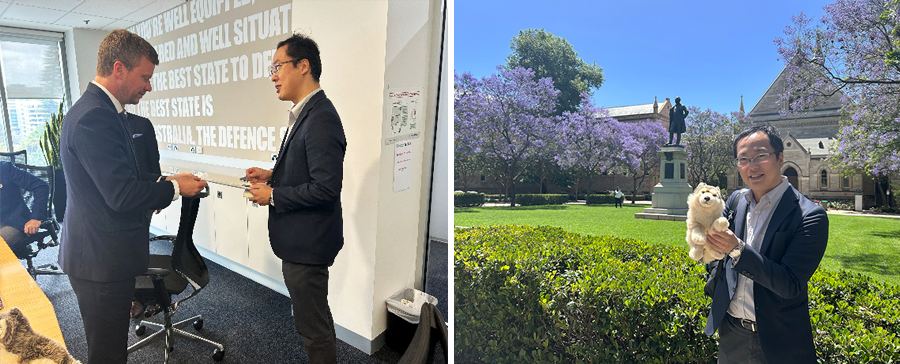
Left: With Campbell Pegg, Space Director of the South Australian Space Industry Centre (SASIC).
Right: The campus of the University of Adelaide, located near the Australian Space Agency (ASA).
Adelaide | Public Lecture: "Mission Possible: Space Collaborations"
At the "Mission Possible: Space Collaborations" event, jointly hosted by JAXA and the Australia-Japan Foundation at the Australian Discovery Centre, which was opened to the public by the Australian Space Agency (ASA) in Adelaide, Deputy Director Tsuda spoke about the current state of Japan-Australia space cooperation. His talk was framed around the story of Hayabusa2 ― from its initial concept and launch to the capsule's landing and the recovery of samples from asteroid Ryugu ― and the continuing narrative that leads into the upcoming MMX mission.
The achievements of space exploration do not end in laboratories or control rooms alone. How they are received by society, and how they are passed on to the next generation, are equally important questions. In this sense, the time for open dialogue at this public event carried special significance as a space to reflect on those broader implications.
The success of one mission opens the door to the next challenge. How far can science extend its reach through cooperation that transcends national borders? The lecture was not merely a retrospective on past accomplishments, but a moment to pose questions about the future to everyone in the audience.
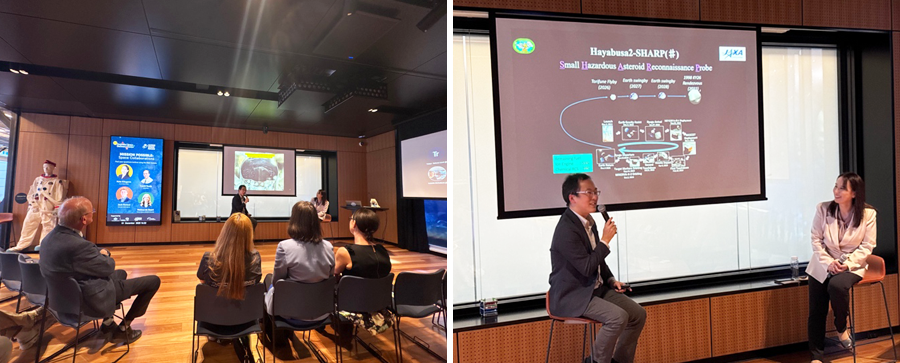
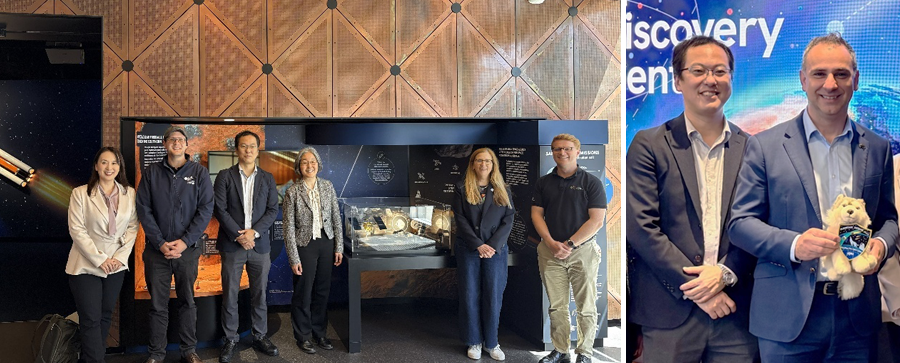
Left: With the speakers and Ms. Ogawa Natsuko, Chair of the Australia-Japan Foundation, in front of the Ryugu sample exhibit at the Australian Space Discovery Centre (ASDC).
Right: Deputy Director Tsuda with Enrico Palermo, Head of the Australian Space Agency (ASA).
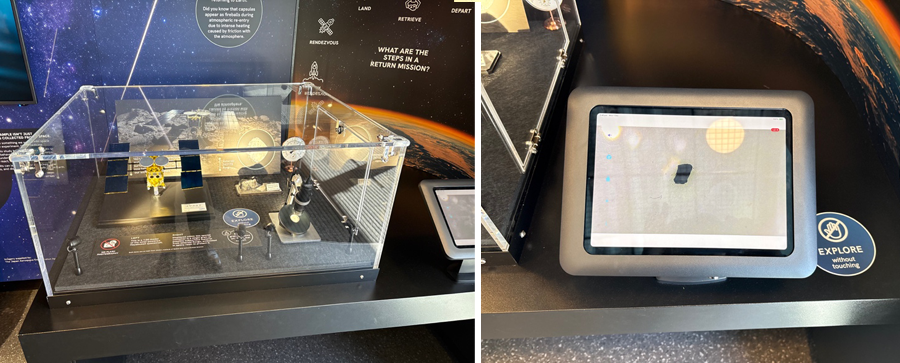
Left: The Ryugu sample on display alongside a model of Hayabusa2.
Right: A microscopic close-up of the Ryugu sample.
X posts from the public opening ceremony
https://x.com/ISAS_JAXA_EN/status/1988595007075520552
https://x.com/ISAS_JAXA_EN/status/1986660401355051364
https://x.com/ISAS_JAXA_EN/status/1977941602606916023
Melbourne | Lecture for the Japanese Community
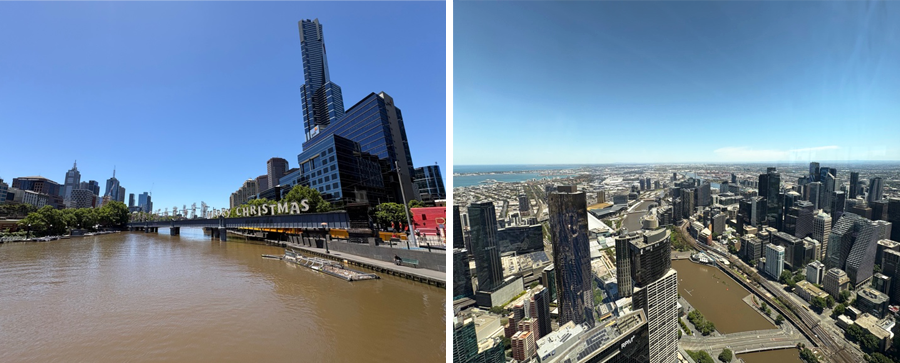
Early summer in Melbourne. Blue skies stretched over the city as it prepared for Christmas.
After leaving Adelaide, Deputy Director Tsuda gave a lecture for the local Japanese community in Melbourne, where Christmas is celebrated in early summer. Sharing this milestone of Hayabusa2's fifth anniversary with Japanese residents in Australia, he spoke about the challenges and achievements of the Hayabusa2 mission, as well as the significance of future international cooperation, including the upcoming MMX mission.
Although the topic of space science and exploration is highly specialized, the lecture attracted interest across generations and backgrounds, and the venue was filled with a warm yet lively atmosphere. For those living far from Japan, the story of space exploration also serves as a window through which to reconnect with their ties to their home country. The time shared together became a quietly memorable experience for everyone involved.
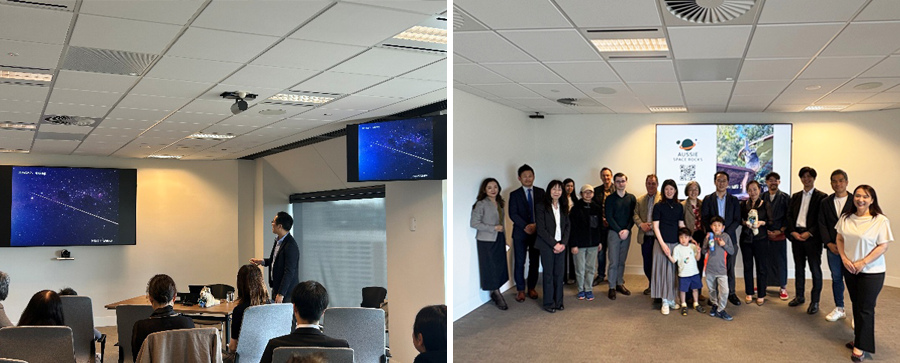
Japanese community members in Australia listening attentively at NTT DATA in Melbourne. Group photo at the end.
Melbourne | Mission Possible: "Space × Art" and Related Events
Deputy Director Tsuda delivered a keynote lecture as part of the Mission Possible series held in Melbourne. At the "Space × Art" event, the intersection of science with culture and art was presented as a central theme. The sense of wonder and the questions raised by space science and exploration resonate not only with researchers, but also with the imagination of artists and creators.
Lively discussions took place on the connections between space, art, and society. Among the exhibits were intricate paper-cut artworks by an artist from Kyoto, which sparked reflections on possible links with the sensibilities of Indigenous Australian culture. In addition to this, events on "Space × Medicine" and "Space × Law" were also held.
As an attempt to convey the stories of space that lie beyond numbers and data, this series of dialogues left a particularly strong and lasting impression.
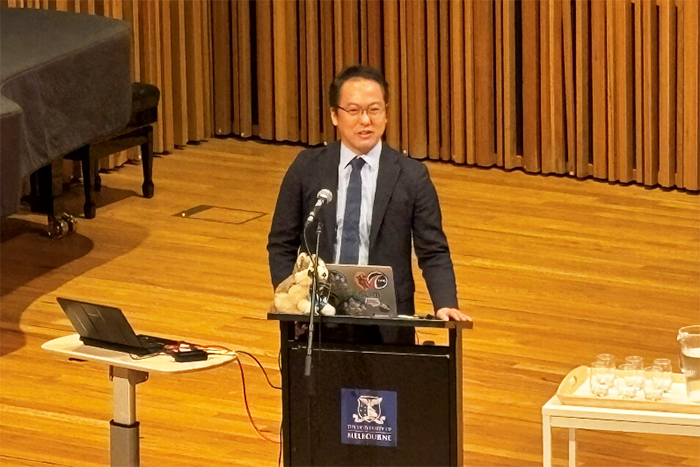
Deputy Director Tsuda delivering the keynote lecture.
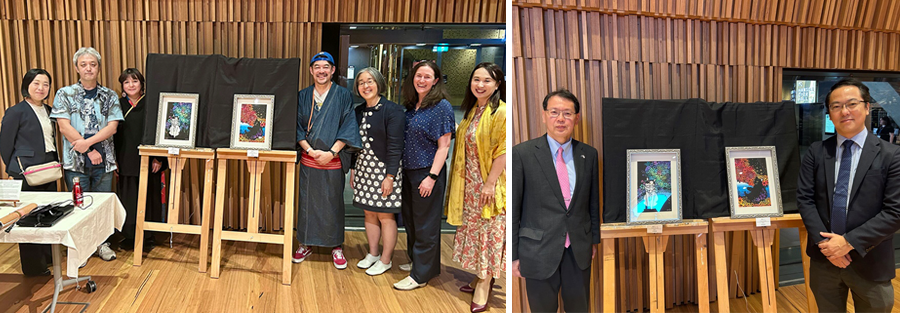
Left: With the artist MISA and participants in front of the kirie (paper-cut) artwork.
Right: Consul General Furuya with Deputy Director Tsuda.
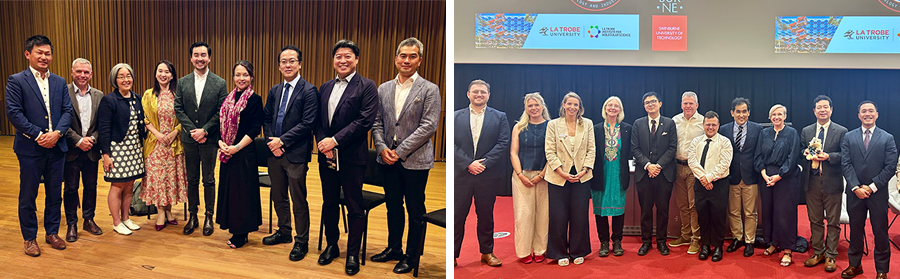
Left: Participants of the "Space × Art" session, including Ms. Ogawa Natsuko, Chair of the Australia-Japan Foundation, and Professor Kate Kitagawa of Aussie Space Rocks.
Right: Participants of the "Space × Law" session.
These events were presented to the public as part of the Australia-Japan Foundation's Space Education and Science Innovation Program, co-hosted by the University of Melbourne, La Trobe University, Swinburne University of Technology, La Trobe Asia, and Daiwa Securities Capital Markets Limited.
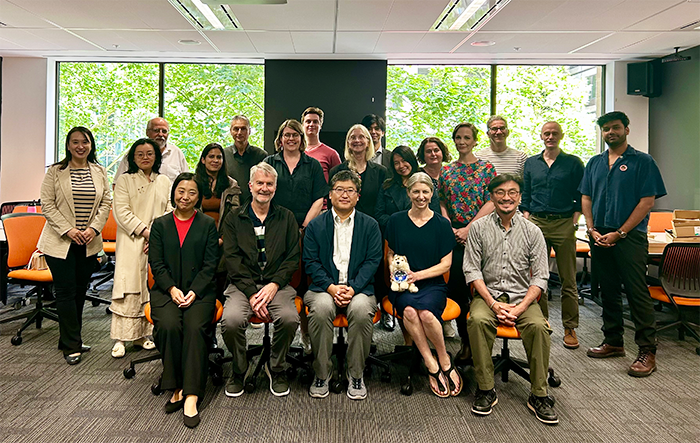
Participants of the "Space × Medicine" session.
Melbourne|Welcome Reception Hosted by the Consul-General of Japan in Melbourne
At the welcome reception hosted by Consul-General Tokuro Furuya of Japan in Melbourne, many representatives from space-related organizations, government, academia, and industry from both Japan and Australia gathered together. In the opening remarks by Consul-General Furuya, followed by speeches from Professor Kate Kitagawa of Aussie Space Rocks, the organizer of the Mission Possible series in Melbourne, Deputy Director Tsuda, and Ms. Katherine Grace, Acting Deputy Head of the Australian Space Agency (ASA), the past achievements of Japan-Australia cooperation in the space sector and prospects for future collaboration were shared, creating a warm and friendly atmosphere for exchange.
Throughout the reception, Deputy Director Tsuda engaged in conversations with each of the participants, reaffirming that Japan-Australia space cooperation is supported not only by research and technology, but also by trust built through personal connections.
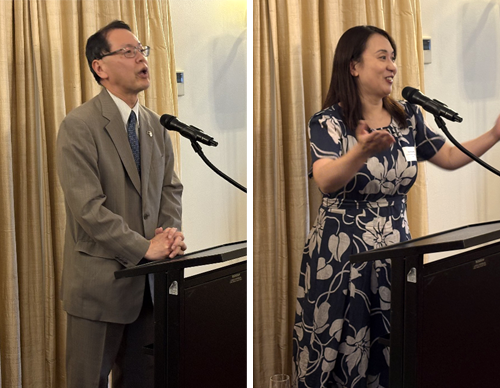
Left: Opening remarks by Consul-General Furuya Tokuro.
Right: Professor Kate Kitagawa of Aussie Space Rocks.
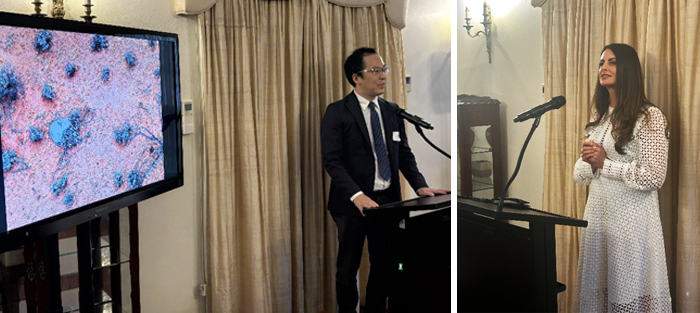
Left: Deputy Director Tsuda explaining the Hayabusa2 mission with video footage.
Right: Dr. Catherine Grace, Acting General Manager, National Space Capability, Technology and Programs at the Australian Space Agency (ASA), speaking on the importance of Japan-Australia international cooperation.
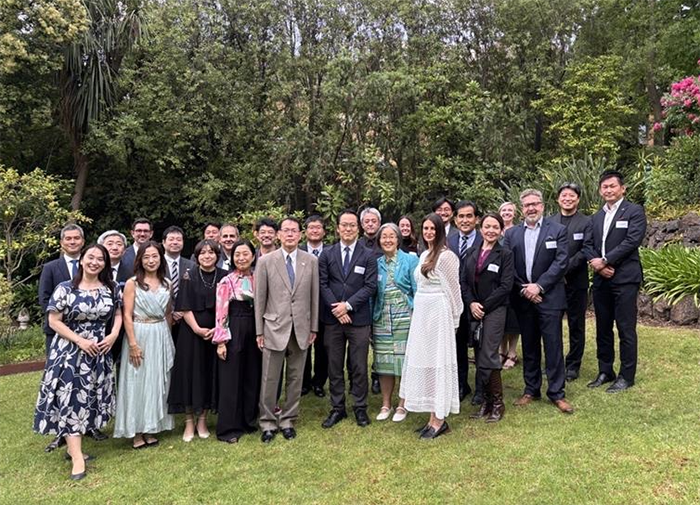
At the reception hosted by the Consulate-General of Japan in Melbourne. Participants from Melbourne, Sydney, and Adelaide engaged in meaningful discussions across government, industry, and academia. Consul-General Furuya Tokuro is on Deputy Director Tsuda's right.
Melbourne|Research Collaboration and Human Resource Development
At the University of Melbourne, Deputy Director Tsuda visited the MAG Lab and the Melbourne Space Lab, both of which conduct scientific research related to space science and exploration. As one approach to strengthening exchange with Australia in the field of space science and exploration, in connection with the MMX mission, it has been agreed to initiate a pilot human resource exchange program for students, making use of the University of Tokyo's exchange study framework.
MAG Lab (Melbourne Analytical Geochemistry), University of Melbourne
https://sgeas.unimelb.edu.au/research/melbourne-analytical-geochemistry
Melbourne Space Lab, University of Melbourne
https://melbournespace.research.unimelb.edu.au/
Discussions held on site between Japanese and Australian researchers were not aimed at reaching immediate conclusions. Rather, it is precisely the accumulation of such dialogues that will form the foundation for long-term international cooperation in space science and exploration.
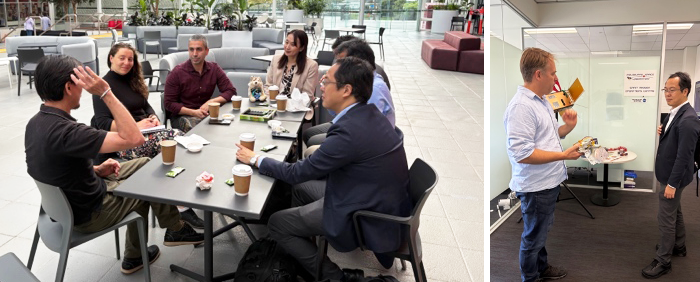
Dialogue between researchers at the University of Melbourne and Japanese researchers, including Deputy Director Tsuda.
Melbourne|"Space Classroom" at the Japanese School of Melbourne
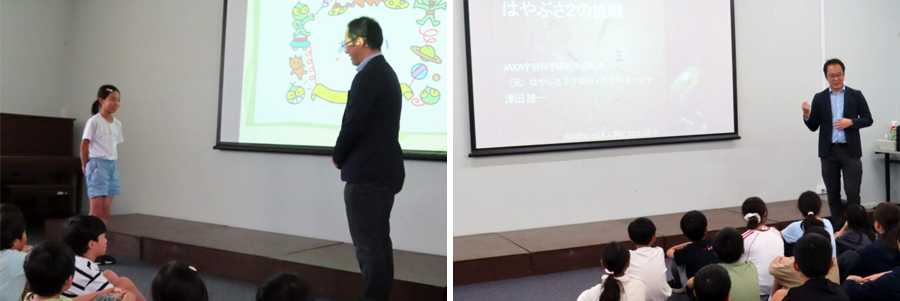
At the Japanese School of Melbourne, a "Space Classroom" was held for preschool and school-age children, divided into two groups according to their developmental stages. Using Hayabusa2 as the main theme, Deputy Director Tsuda spoke about the origins of space, Earth, and life, incorporating quizzes and videos. Toward the end of the session, he also introduced future space exploration, including the upcoming MMX mission to the Martian moon Phobos.
The children listened with bright eyes to stories about the origins of Earth, spacecraft, and asteroids. Through these topics, they learned about the value of challenging the unknown, the excitement of space, and the joy of making things, as dialogue naturally developed between the children and the speaker.
The stories of Hayabusa2 and MMX are not only events taking place in distant space but also gateways to future careers and dreams. One cannot help but hope that this "Space Classroom" will open doors to the children's futures and become a small seed planted in someone's heart.
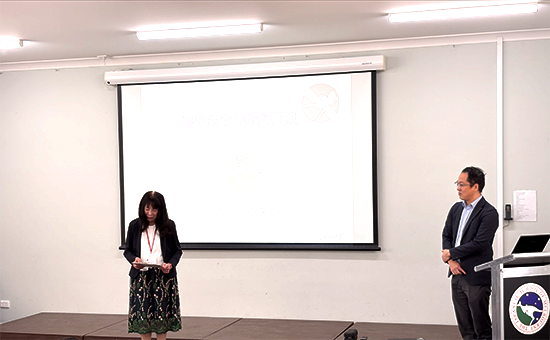
Top: Ms. Kobashi Sachiyo, Principal of the Japanese School of Melbourne, introducing Deputy Director Tsuda.
Bottom: Scenes from the Space Classroom.
Conclusion|Under the Southern Cross
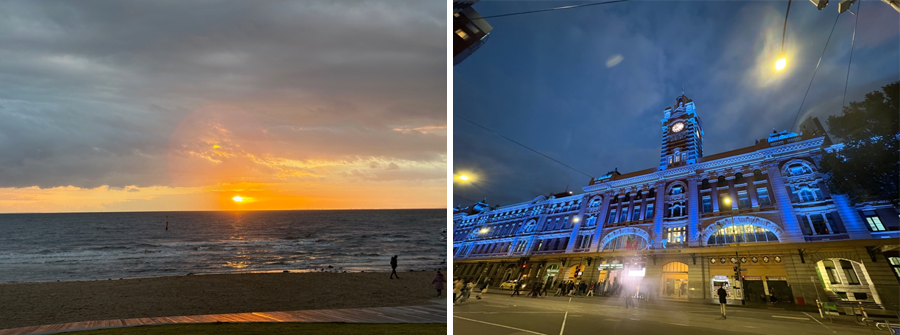
The sun setting over the sea at St Kilda. A day in the Southern Hemisphere quietly comes to an end.
(Right photo) Flinders Street Station at night. The clock tower illuminated in blue brings the day in Melbourne to a close.
Deputy Director Tsuda's visit to Australia became a journey to quietly reaffirm the bond of Japan-Australia cooperation, extending from the "past" of Hayabusa2 through the "present" and into the "future" of MMX.
Across international cooperation, research exchange, human resource development, the space industry, and culture and art in Adelaide and Melbourne, the dialogues shared in each setting will, through the activities marking the 50th anniversary of Japan-Australia friendship and the 50th anniversary of the Australia-Japan Foundation in 2026, gradually become a firm foundation supporting the next generation of space science and exploration. And the thoughts exchanged beneath the sky lit by the Southern Cross will surely be carried forward into what lies ahead.
(2026/02/02)