



[ 日本語 ]
MMX International Outreach Collaboration Event at the University of Bern
On June 8, 2026, a special seminar was held at the University of Bern, Switzerland, marking the kickoff of a new international outreach collaboration between the Institute of Space and Astronautical Science (ISAS), JAXA, and the University of Bern.
The University of Bern is engaged in research and international collaboration related to the Martian Moons eXploration (MMX) mission. In June 2025, the University and JAXA also co-hosted a public outreach event at the Swiss Pavilion at Expo 2025 Osaka, Kansai, Japan: "From the Moon to comets: take a walk!" Building on the relationship established through these activities, the seminar was organized as the first step toward a new collaboration in science outreach.
The event brought together researchers and students from the University of Bern and neighboring research institutions, as well as Mr. Sakurai, First Secretary of the Embassy of Japan in Switzerland. Including online attendees, the seminar attracted more than 100 participants.
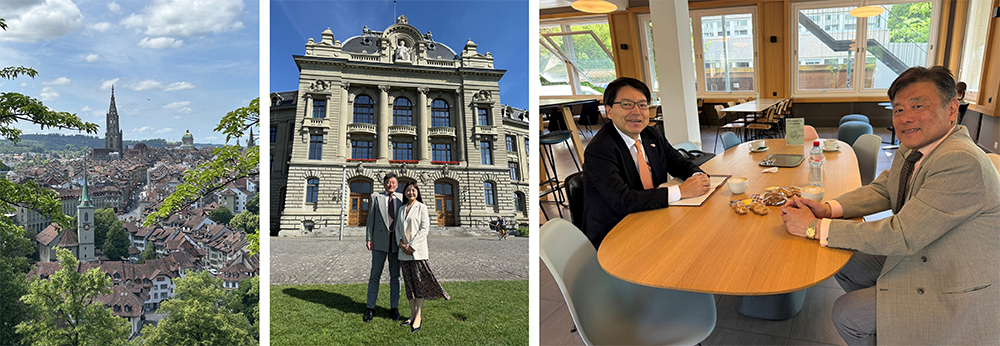
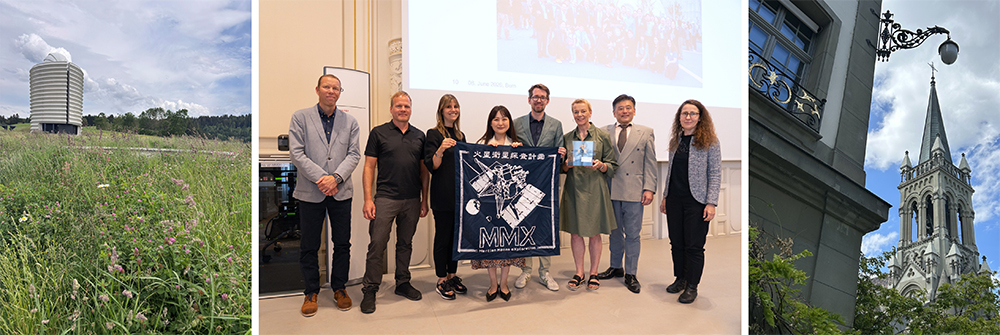
Left: The beautiful city of Bern; Center: The historic University of Bern, where the seminar was held; Right: Mr. Sakurai Hiroyuki, First Secretary of the Embassy of Japan in Switzerland, with Dr. Fujimoto Masaki, Director General, JAXA ISAS.
The seminar was moderated by Dr. Audrey Vorburger, Assistant Professor at the University of Bern's Center for Space and Habitability (CSH). Opening remarks were delivered by Professor Virginia Richter, Rector of the University of Bern, and Professor Brice-Olivier Demory, Director of CSH. To mark the beginning of the collaboration, Dr. Fujimoto Masaki, Director General of JAXA ISAS, presented a 1/48-scale model of MMX spacecraft model to the University of Bern.
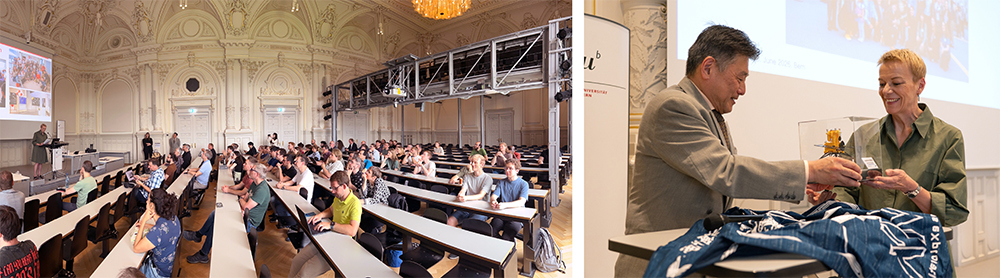
Left: Opening remarks by Professor Virginia Richter, Rector of the University of Bern; Right: Director General Fujimoto presenting the MMX model to Professor Richter
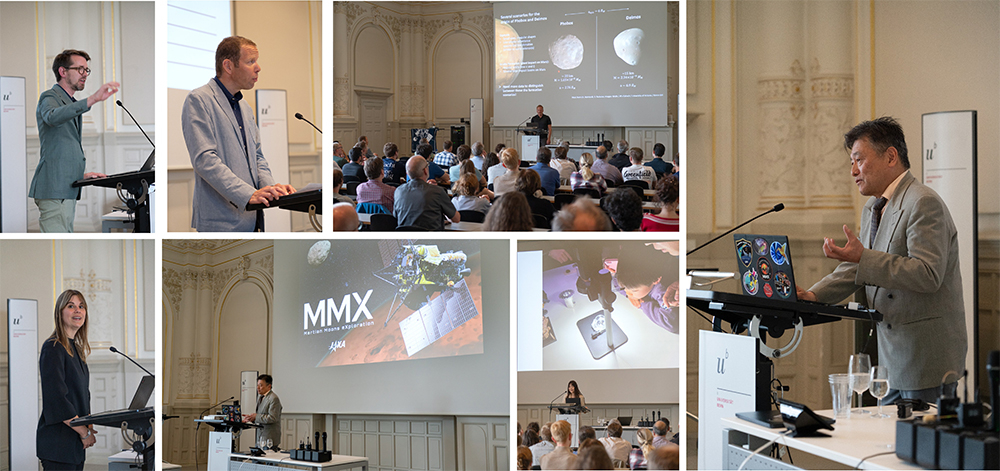
The lecture session featured presentations by researchers from both institutions. Dr. Raphael Marschall introduced the University of Bern's space science research and its international collaborations. Ms. Ojima Tomoko, Associate Senior Researcher at JAXA ISAS, presented the curation of asteroid-returned samples at ISAS and outreach activities based on these valuable materials. Dr. Martin Jutzi discussed recent studies on the origin and evolution of Mars' moon Phobos and their relevance to the MMX mission. The session concluded with a keynote lecture, JAXA's Way of Space Science, in which Director General Masaki Fujimoto introduced the history of JAXA's space science missions, the MMX project, and the importance of international collaboration.
The Q&A session reflected strong interest in JAXA's activities. Questions addressed preparations for the curation of future MMX samples, differences between outreach activities in Japan and overseas, and the role that ISAS has played in Japan's space program, as well as its future direction. The discussion demonstrated broad interest not only in scientific research itself, but also in the role of research institutions and their engagement with society.
・A report on this event was also published by the University of Bern's Center for Space and Habitability (CSH): JAXA's Way of Space Science with Masaki Fujimoto
・The event was also featured on the Center for Space and Habitability (CSH) LinkedIn page: JAXA's Way of Space Science and the Japan-Swiss Space Collaboration
After the seminar, a tea reception was held in an outdoor café space. In the mild Bern weather, participants from the University of Bern and JAXA enjoyed informal conversations in a relaxed setting, different from the atmosphere of the lecture hall. The day was blessed with clear skies, and the beautiful Alpine mountains could be seen in the distance, providing a distinctly Swiss backdrop for the exchange.
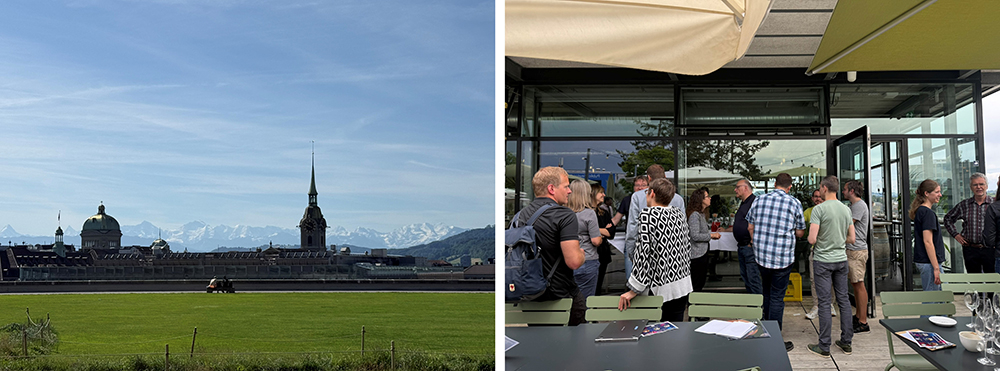
Left: View of the Alps from the University of Bern; Right: Tea reception after the seminar
Following the tea reception, the University of Bern arranged a laboratory tour for the visiting JAXA members. During the tour, participants were introduced to the University's contributions to a wide range of space missions, including the development of scientific instruments for missions such as Comet Interceptor and the ExoMars Trace Gas Orbiter, and had the opportunity to exchange views with researchers. Visiting the laboratories and seeing research facilities and technologies under development firsthand provided a deeper understanding of the University's role in space exploration. The tour also offered an opportunity to exchange ideas on future outreach activities and to share experience and perspectives in both research and science communication.
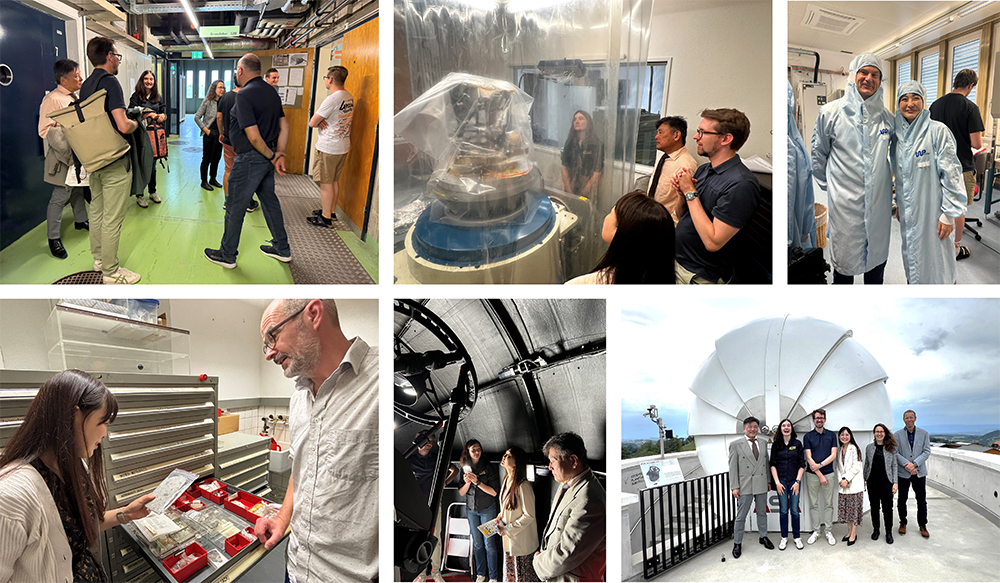
Top row and lower left: Laboratory tour at the University of Bern; lower center and right: Visit to Space Eye, an astronomical observatory associated with the University of Bern.
The visit highlighted new possibilities for collaboration not only in research, but also in outreach activities that communicate the excitement and achievements of space exploration to society. Through exchanges with colleagues at the University of Bern, expectations for future cooperation in both research and outreach were further strengthened.
Held a side event on planetary defense at the United Nations (Vienna)
~ Global collaboration centered on the RAMSES mission ~
June 11, 2026, Vienna, Austria, with flowers in full bloom and traces of spring still lingering. At the Vienna International Centre, located a few metro stops from the city center and just across the Danube River, we held the side event "Earth Defense in Action: International Cooperation on RAMSES" in cooperation with the European Space Agency (ESA), the Italian Space Agency (ASI), and the UN Office for Outer Space Affairs, timed to coincide with the session of the main committee of the UN Committee on the Peaceful Uses of Outer Space (COPUOS).
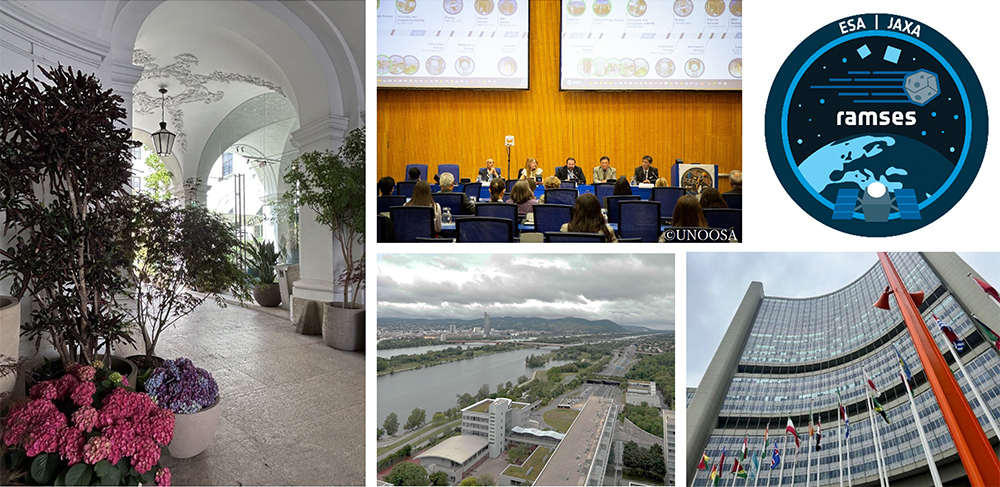
One hundred and four countries are members of the UN COPUOS in Vienna. Subcommittees are held every February and April, and the main committee is held in June.
A new development in cooperation in the field of Earth defense
On May 7, 2026, JAXA and ESA signed a Memorandum of Cooperation (MOC) to strengthen cooperation in the field of Planetary Defense, as well as a cooperation agreement regarding the RAMSES mission, a project to explore the asteroid Apophis. This side event was planned as an opportunity to mark this milestone in the cooperation and convey its significance to the international community.
At the beginning of the event, Ambassador Atsushi Kaifu, Permanent Representative of Japan to the International Organizations in Vienna, delivered the opening remarks and emphasized that planetary defense is a common challenge for all humanity. In the following panel discussion, ISAS Director Masaki Fujimoto, Paolo Martino, ESA-RAMSES Project Manager, Romana Kofler, UN Office for Outer Space Affairs officer in charge of planetary defense, and Teodoro Valente, President of ASI, took the stage and introduced their respective efforts and outlooks from their own perspectives.
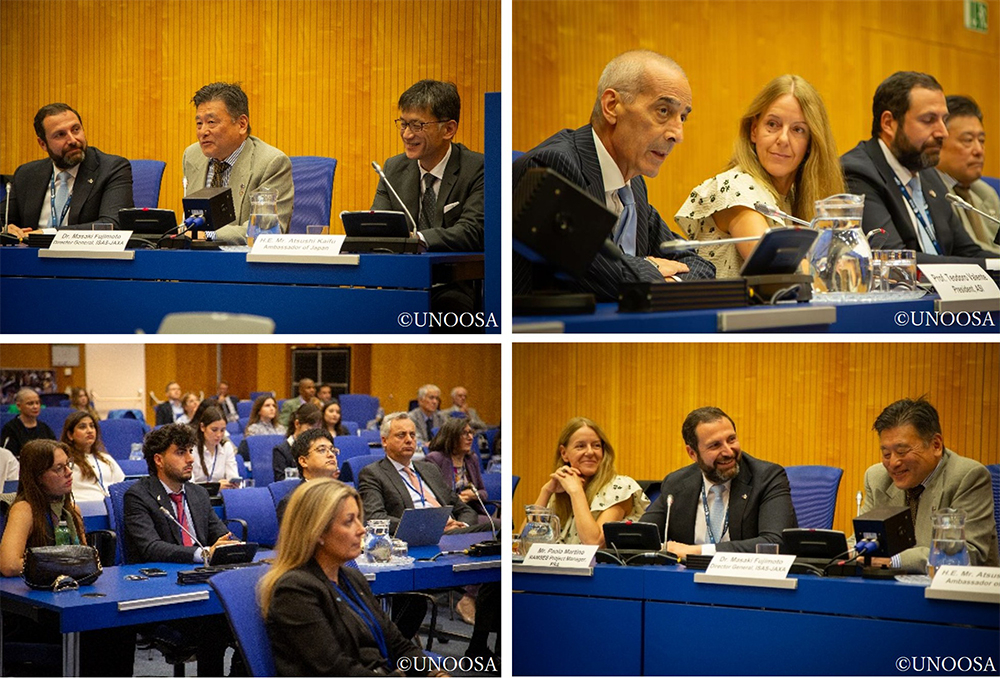
A hugely successful side event. There were also jokes and laughter from the speakers.
RAMSES Mission and the Approach of Apophis
The RAMSES mission, which was at the center of the discussion, is an international exploration project targeting the asteroid Apophis, which will approach Earth in 2029, and preparations are under way for a launch in 2028. The purpose of this mission is to aim to acquire scientific and technical knowledge that will contribute to future planetary defense through detailed exploration of near-Earth objects. In addition to providing the thin film lightweight Solar Array Paddle (SAP) and the Thermal Infrared Imager (TIRI) to be mounted on the RAMSES spacecraft, JAXA will participate in this mission through the launch with the H3 rocket, enabling the Apophis exploration as a joint ESA/JAXA mission.
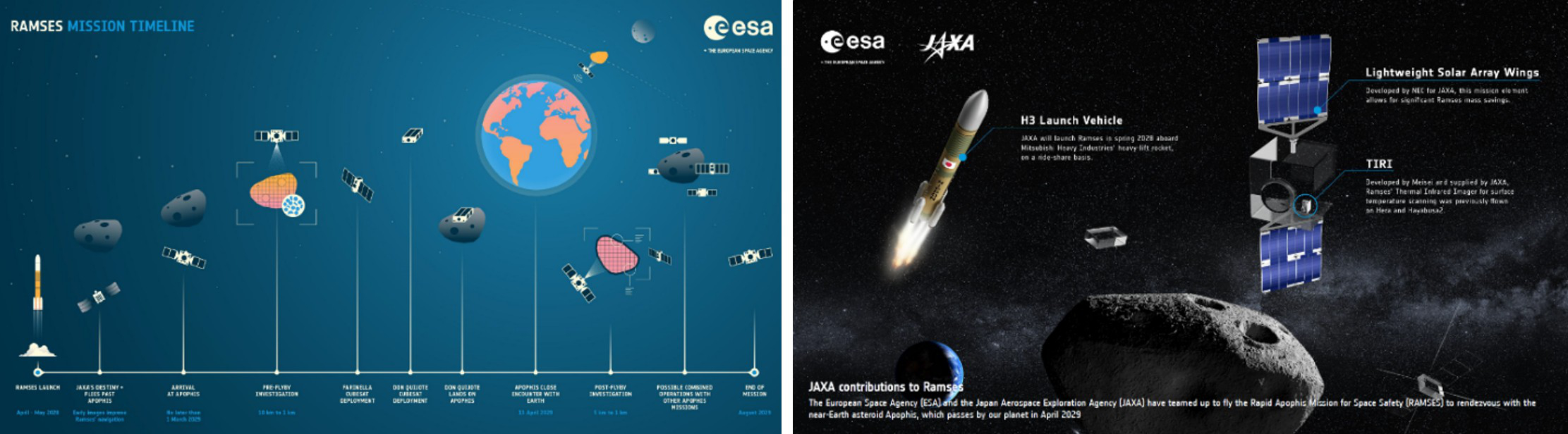
Presentation slide by Paolo Martino, ESA-RAMSES Project Manager
Strengthening cooperation with international frameworks
At this event, the importance of cooperation with international frameworks related to planetary defense was also reaffirmed. The International Asteroid Warning Network (IAWN), which is administered by the UN Office for Outer Space Affairs, and the Space Mission Planning Advisory Group (SMPAG) are promoting asteroid discovery and follow-up observations, as well as the study of collision-avoidance measures, through international cooperation.
The UN Office for Outer Space Affairs emphasized that planetary defense is not an issue limited to any particular country or institution, but rather one that the international community as a whole should address, and it was shared that the RAMSES cooperation between JAXA and ESA complements and strengthens these multilateral frameworks.
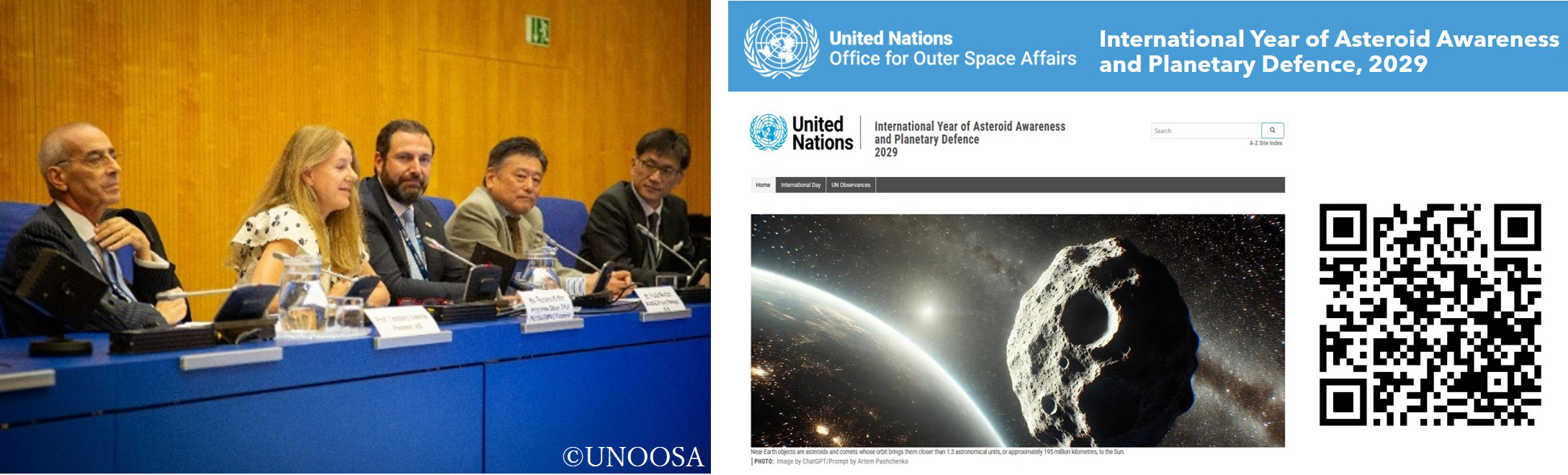
Romana Kofler, the UN Office for Outer Space Affairs official responsible for planetary defense, serves as the secretariat for SMPAG.
Expected as a model for international cooperation
In the panel discussion and Q&A session, the need for international cooperation through information sharing, joint missions, and the development of policy frameworks was repeatedly emphasized. Participants shared their hopes that the RAMSES mission will serve as a model case for international collaboration in the field of planetary defense. It was also pointed out that, in preparation for Apophis's close approach in 2029, the importance of building international partnerships and conducting outreach activities, in addition to scientific efforts, was also emphasized.
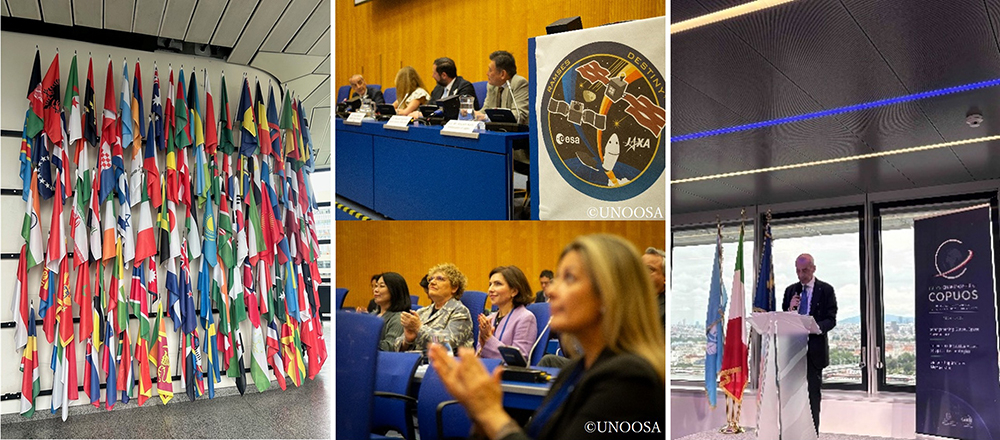
Right: Teodoro Valente, President of ASI and also Chair of UNCOPUOS for the 2026-2027 term
At this COPUOS meeting as well, Director of the UN Office for Outer Space Affairs Aarti Holla-Maini referred to the activities of IAWN and SMPAG, as well as their contribution to the RAMSES mission, indicating the growing international interest in planetary defense.
This event was an important opportunity to indicate the future direction of the planetary defense field, where space science and international cooperation are closely intertwined. ISAS/JAXA will continue to work with the international community to promote space science missions that contribute to ensuring the safety of humanity.
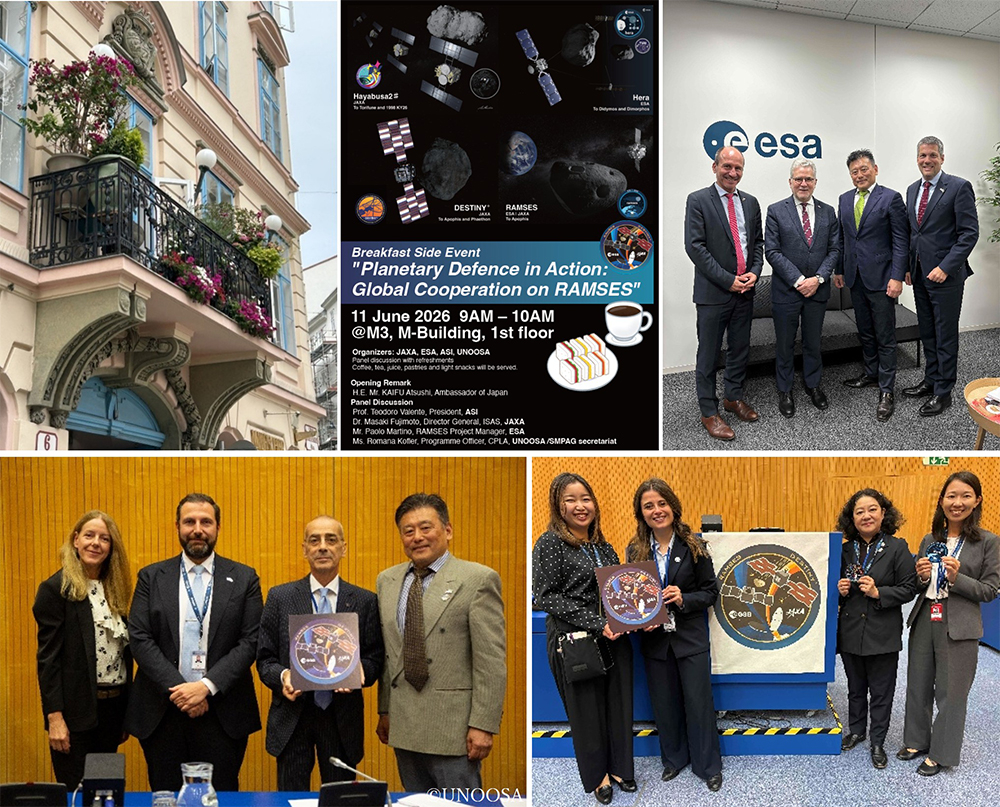
Photo upper right: Many thanks as well to Jean-Charles Bigot, Director of the ESA Tokyo Office, who worked together with us to make the side event happen!
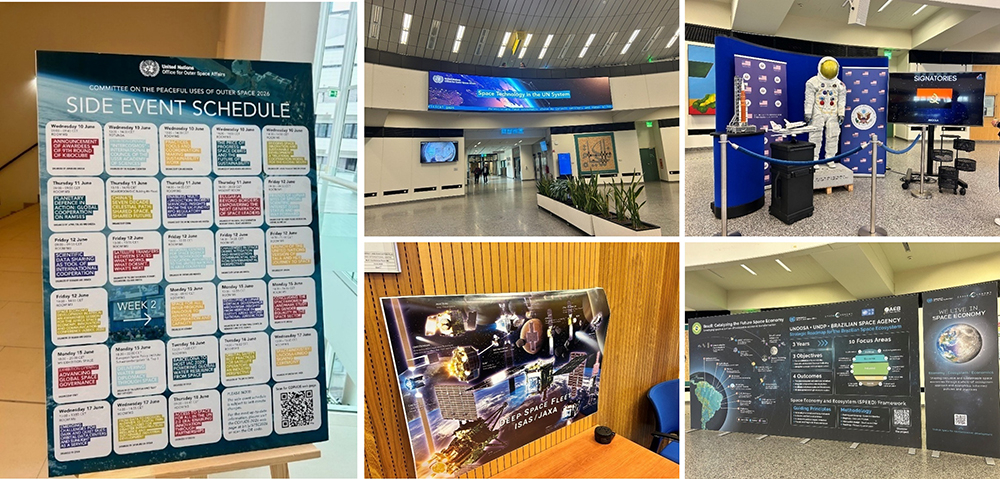
The United Nations is bustling with activity at the space exhibition, following about two weeks of COPUOS meetings
(2026/07/22)