RESEARCH
Spacecraft Control Using Magnetic Forces
Electromagnetic Formation Flight
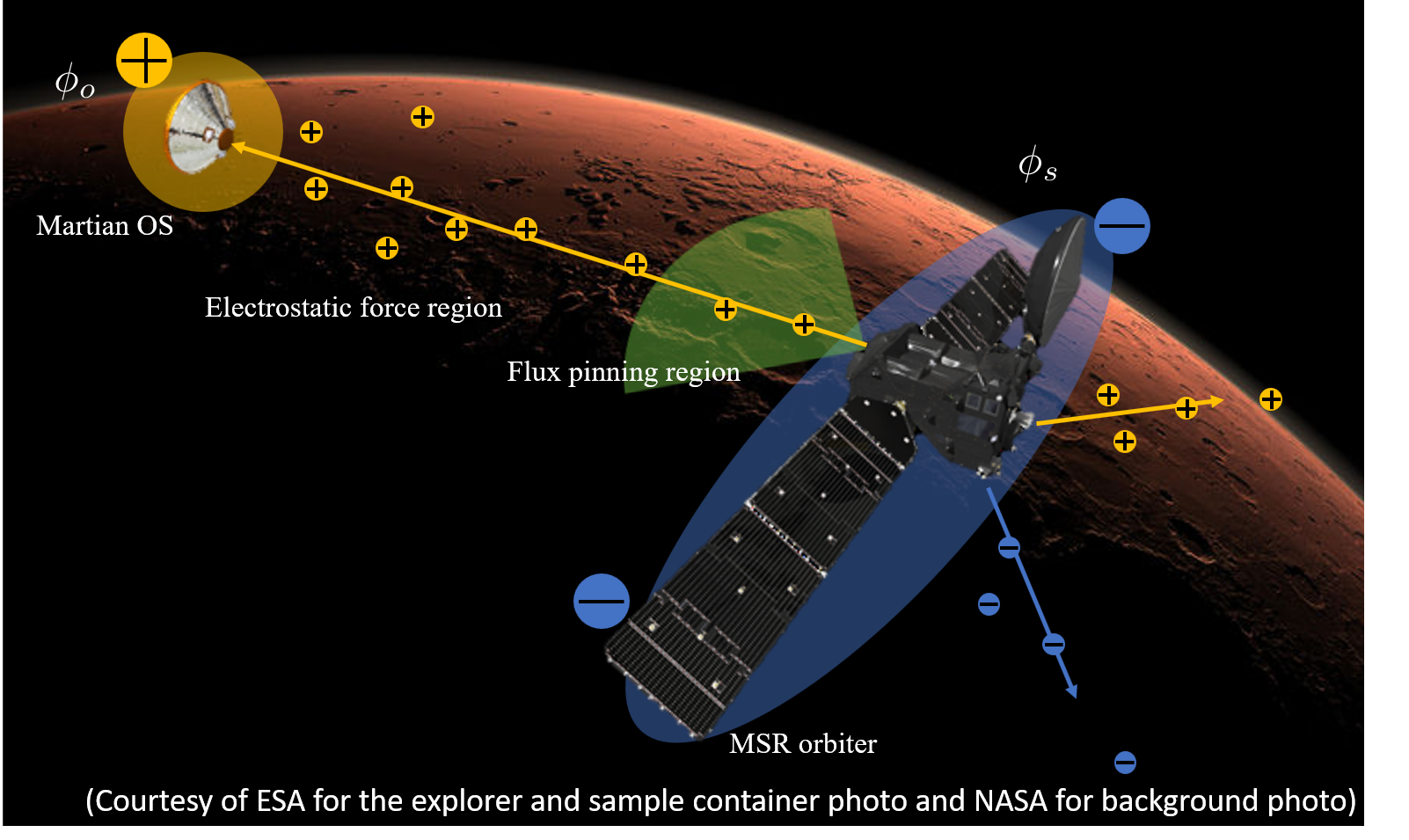
In collaboration with laboratories overseas, we are working on the design of an autonomous rendezvous and docking system for sample return from gravitating bodies. We design and evaluate a system that uses electrostatic interaction to control the state of the sample container, which is a non-cooperative target.
 |
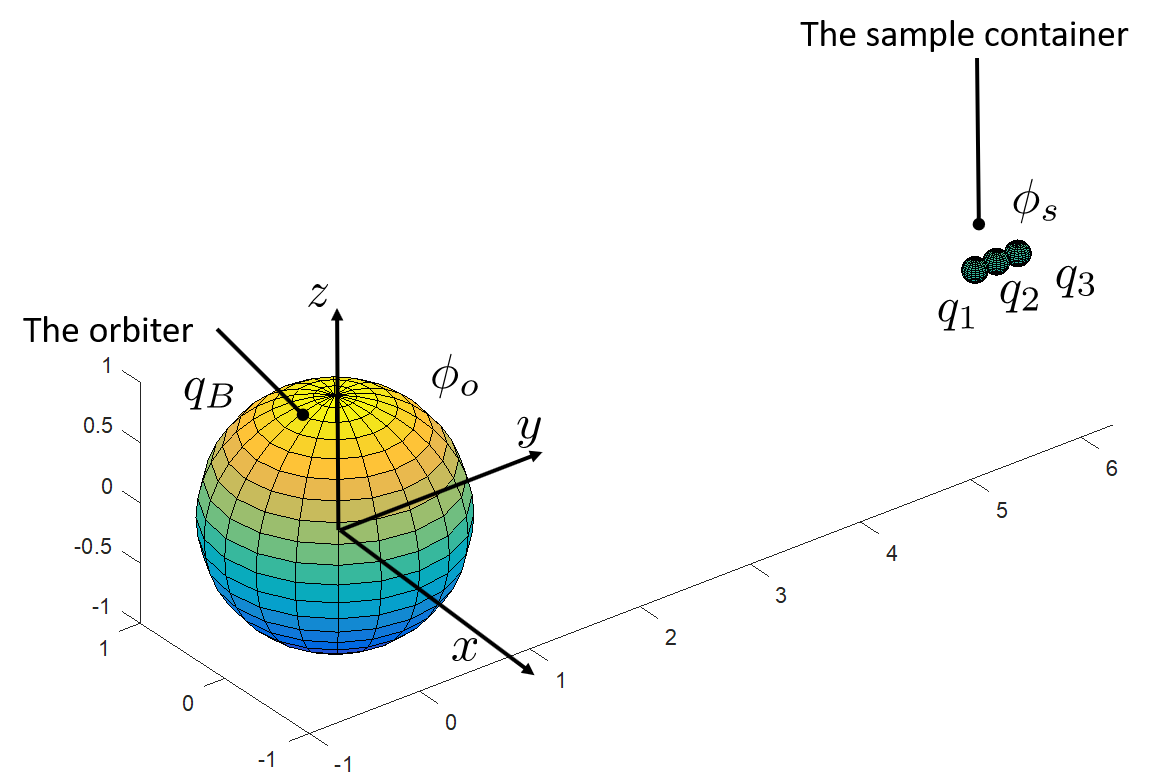 |
Study for a Mars sample return mission
Magnetic Vibration Isolation
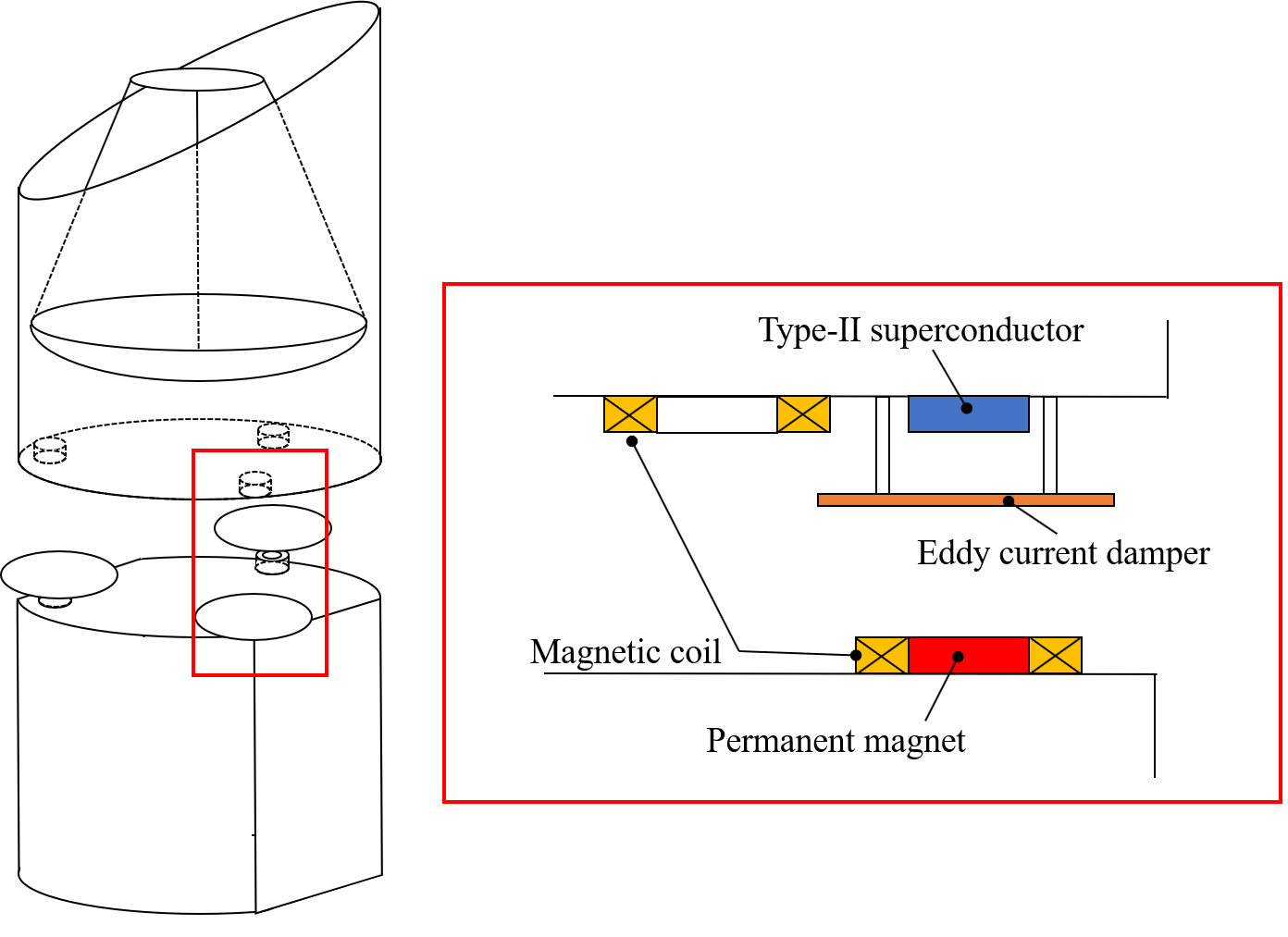
For next-generation space telescopes, we propose a new micro-vibration isolation mechanism that connects the mission module and the bus module magnetically. To passively maintain the relative position and attitude between the mission and bus modules, we apply the flux pinning effect and build a contactless micro-vibration isolator.
 |
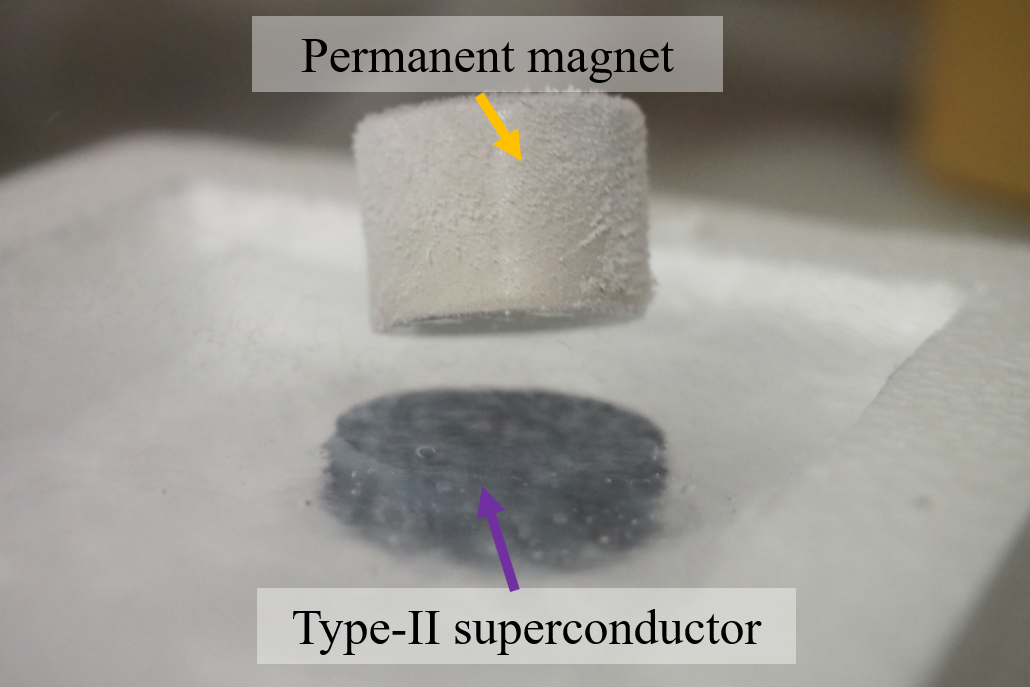 |
Vibration isolation using magnetic forces
Satellite Design and Motion Planning for Distributed Space Systems via Electromagnetic Formation Flight
We study satellite design methods and motion planning for realizing distributed space systems with electromagnetic formation flight. Large space structures formed by magnetic forces do not depend on propellant, unlike conventional thrusters, and are therefore expected to have a long lifetime. One application is the distributed space antenna, in which multiple small satellites cooperate to achieve a desired formation shape and enable communication with deep space or with mobile terminals on the ground. However, because magnetic forces are used as the control force, power consumption must be taken into account, and this also affects antenna performance such as transmit power. Actuator (coil) design and motion planning must therefore consider the trade-off between control and communication.
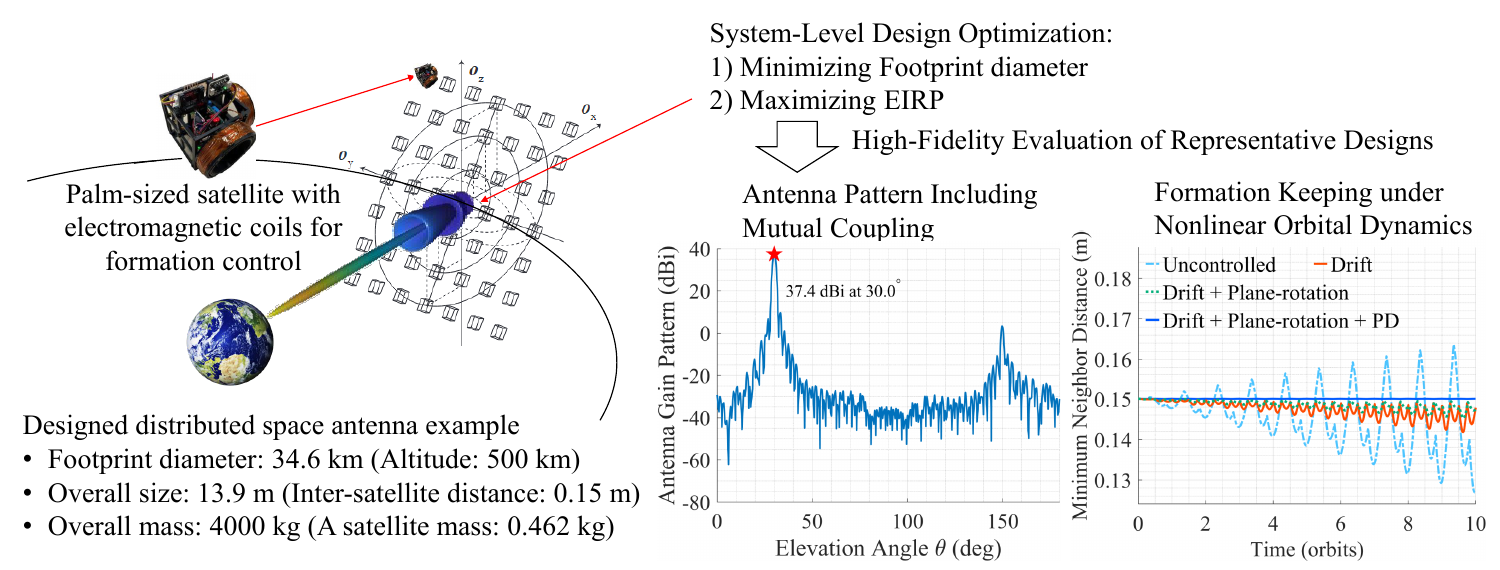
Example study of a distributed space antenna
6-DOF Proximity Control Using Electromagnetic Forces
To realize large distributed space systems with electromagnetic formation flight, it is essential to handle spacecraft accurately at short separations. Electromagnetic forces weaken rapidly with distance, so obtaining practical forces with normal-conducting coils makes operation in the near-field region difficult to avoid.
In the near-field region, however, the spatial distribution of the magnetic field is hard to capture with simple approximations, and the response is sensitive not only to the relative position but also to the attitude and to small misalignments. Taking this near-field complexity into account, we design controllers that run in real time on board and achieve the desired relative position and attitude accuracy at close range.

Proximity control by electromagnetic formation flight
Landing Guidance and Control
For more precise scientific exploration, research on precision landing on the Moon and planets and the technology demonstration project SLIM are being carried out. Precision landing requires cameras with which the spacecraft can determine its own position, and guidance technology that flies the spacecraft to the landing target without support from the ground.

Navigation-Optimal Trajectories for Precision Landing
Guidance methods that land with minimum fuel have been studied before, but landing accuracy degrades when the accuracy of the spacecraft's self-localization decreases. We therefore study how to improve landing accuracy by flying trajectories that increase the accuracy of camera-based position estimation (for example, flying at low altitude or pointing the camera at terrain with many features) while taking the remaining fuel into account.
Specifically, the spacecraft must fly a navigation-optimal trajectory that reduces the covariance matrix of the Kalman filter used in the navigation computation. To this end, we convert the optimal control problem into a convex optimization problem by discretized linearization and study how to execute the optimization on board.
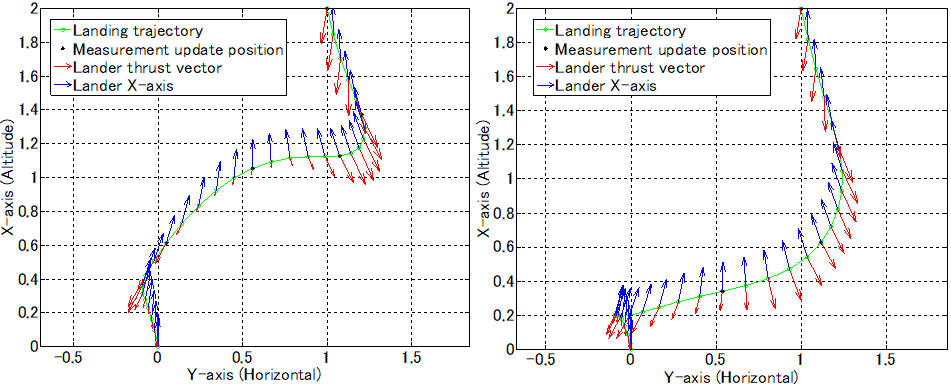
Examples of a fuel-optimal trajectory (left) and a navigation-optimal trajectory (right)
Successive Convexification (SCvx)
Landing guidance requires trajectories to the target site to be generated quickly on board. To address this, we conduct theoretical and applied research on successive convexification (SCvx) as an optimization-based guidance method.
On the application side, we study landing trajectories that maximize observation efficiency in scenarios where scientific observations are made during descent. Specifically, we introduce information entropy as a new performance index in the trajectory computation and use SCvx to efficiently obtain trajectories that maximize observation performance.
On the theoretical side, we focus on methods that treat manifold structures, such as the quaternion norm constraint, which have conventionally been handled as external constraints, as the solution space itself. By incorporating this approach directly into the SCvx algorithm, we aim to improve both computational efficiency and accuracy.
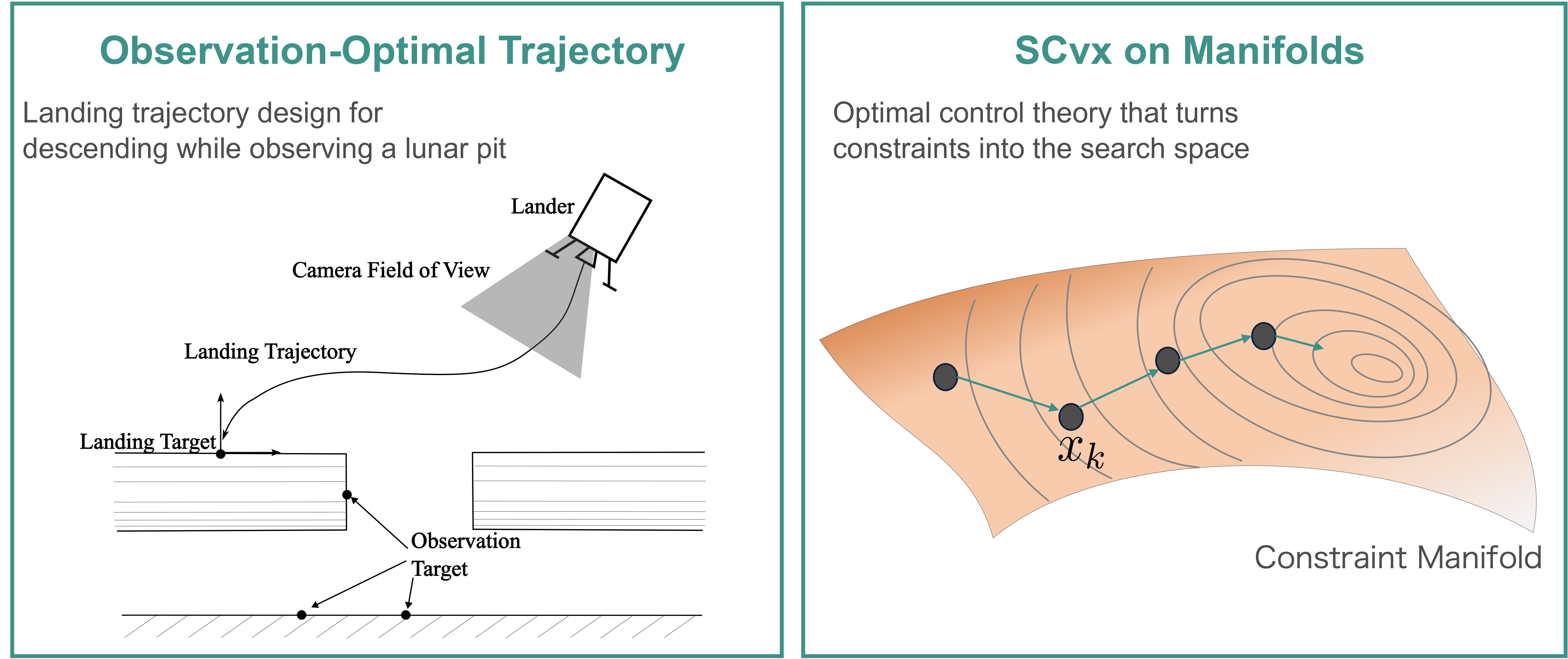
Research on SCvx
Vibration Suppression for Wire-Antenna Satellites (Planetary Magnetospheric Explorers)
Many planetary magnetospheric explorers have been launched to clarify the structure of planetary magnetospheres and the mechanisms of phenomena such as the interaction between the solar wind and the Earth's magnetosphere. These satellites carry wire antennas, long and slender structures about 15–50 m in length that are used to observe electromagnetic fields. To keep these antennas under tension, a passive attitude control method called spin stabilization, in which the satellite body spins like a top, has conventionally been adopted (for example, in the attitude control system of the geospace exploration satellite Arase). However, this method has many drawbacks, such as limiting the freedom of satellite design and making agile attitude changes for observation difficult. Specifically, because spin stabilization is a passive method that relies on the gyroscopic stiffness obtained by rotating the satellite body, it is difficult to control the direction of the spin axis and to change the observation attitude agilely; moreover, because the satellite body rotates, observation with optical instruments such as cameras is also difficult. For these reasons, separate satellites have conventionally had to be launched for different types of instruments.
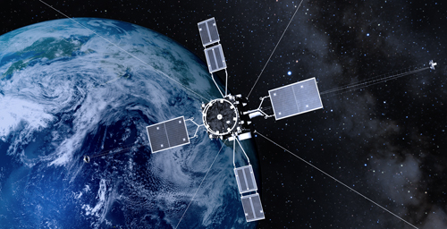
Arase
In this research, we propose an attitude control system based on dual-spin stabilization, an improvement on the conventional method, which could solve the problems of conventional planetary magnetospheric explorers with wire antennas at once and is expected to allow observations with particle, wave and optical instruments, which have conventionally required several satellites, to be performed by a single satellite. As an initial study toward flexible changes of the observation attitude, we investigate control methods for fast suppression of the residual wire-antenna vibration after attitude maneuvers, which disturbs the attitude of the satellite body and hinders observation, and we verify their effectiveness by simulation.

Modeling of a wire-antenna satellite