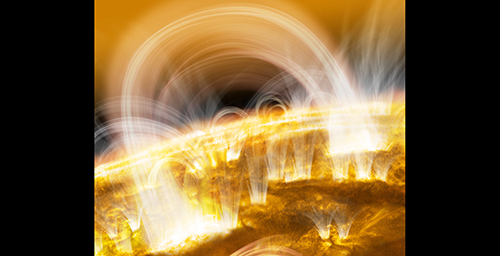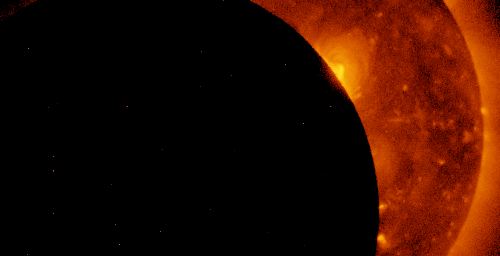


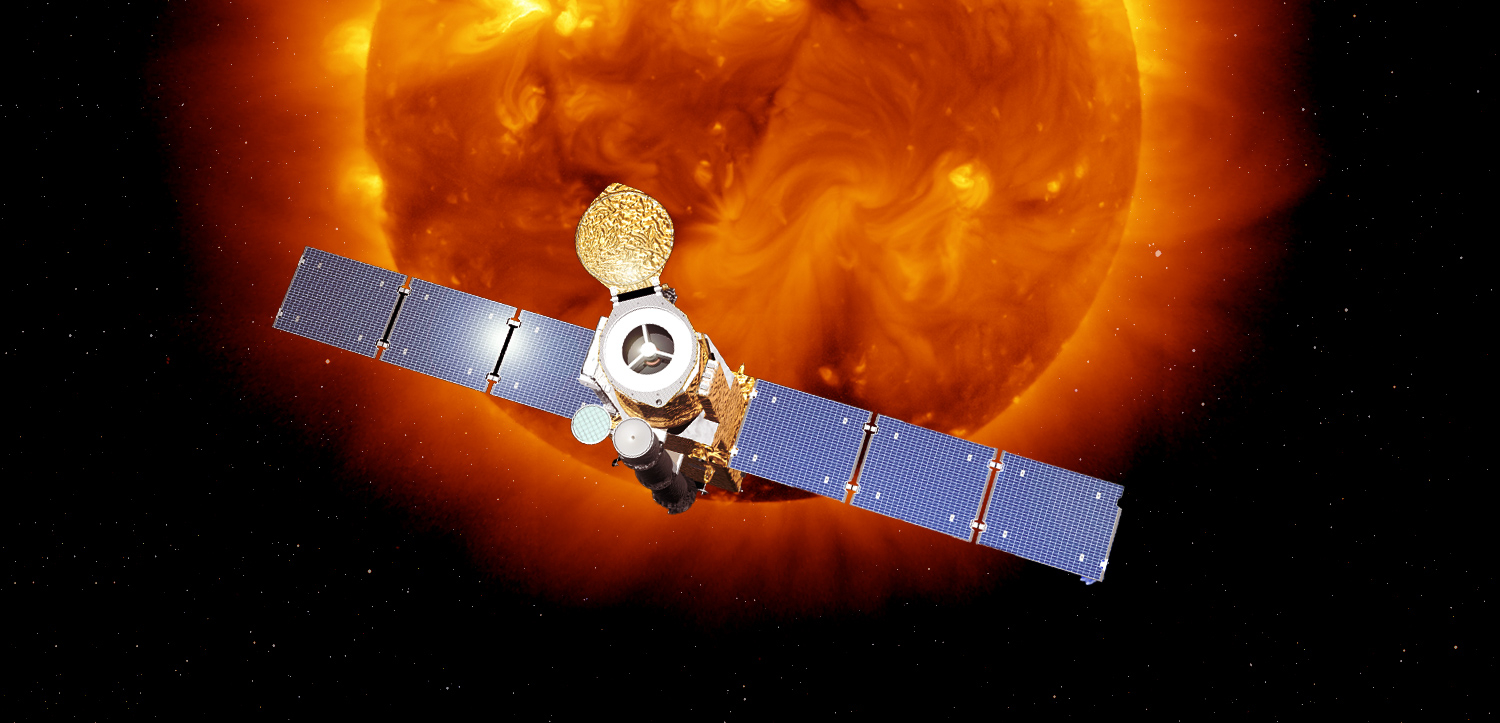


The Solar Observing Satellite Hinode is equipped with three telescopes and was developed and launched in cooperation with the National Astronomical Observatory of Japan. The probe aims to examine the riddles of heating phenomena and the activity that occurs in the sun and to explain phenomena such as heating and magnetism occurring universally in solar system plasma, especially in solar flares, solar coronas, and solar magnetic fields.
Hinode is a Japanese solar observation probe developed and launched by ISAS/JAXA in cooperation with the National Astronomical Observatory of Japan. The development of the three telescopes was carried out in international cooperation with the US (NASA) and the UK (STFC). Together with the European ESA and the NSC in Norway, these research institutions carry out the scientific operations for Hinode.
In late October of 2006 the protective door was opened and experimenters began making observations using the three telescopes. Researchers from device research teams composed of international members have joined in the scientific operations for the satellite and these operations are performed at ISAS. Hinode is used as a solar observatory in orbit and observation plans are established based on the proposals of international researchers and of the device research team. Researchers frequently perform coordinated observations with other satellites and ground-based observatories and the scientific data obtained by these observations can be used for research by anyone shortly after it is obtained.
| Name (pre-launch in parentheses) | HINODE (SOLAR-B) |
|---|---|
| International Designation Code | 2006-041A |
| Objectives | Investigation of magnetic activity of the Sun including its generation, energy transfer and release of the magnetic energy. Major research topics are as follows: 1.To understand the processes of magnetic field generation and transport including the magnetic modulation of the Sun’s luminosity. 2.To investigate the processes responsible for energy transfer from the photosphere to the corona and that are responsible for the heating and structuring of the chromosphere and the corona. 3.To determine the mechanisms responsible for eruptive phenomena, such as flares and coronal mass ejections, and understand these phenomena in the context of the space weather of the Sun-Earth System. |
| Lunch Date | 06:36, September 23, 2006 (JST) |
| Launch Location | Uchinoura Space Center (USC) |
| Launch Vehicle | M-V-7 |
| Weight | Approx. 900kg |
| Dimensions | Approx. 1.6m x 1.6m x 4m 10m long from end to end of solar array paddles |
| Orbit Altitude | Approx. 680 km |
| Orbit Inclination | 98° |
| Type of Orbit | Circular (Sun-synchronous polar) |
| Orbital Period | 98 min |
| Scientific Instruments | Solar Optical Telescope (SOT) with 50cm aperture X-ray telescope (XRT) Extreme-ultraviolet Imaging Spectrometer (EIS) |
| Operation | Observations with the scientific instruments started after opening their protective doors in late October, 2006. Scientific operations are conducted from the ISAS facility located in Sagamihara, Japan, with participation of scientists from international instrument teams. Hinode is operated as a solar observatory on orbit and its observations are scheduled with Hinode core team programs and proposal programs including coordinated observations with ground-based observatories and space missions. The data from these observations are also freely available as soon as after their acquisition. Hinode is a Japanese mission developed and launched by ISAS/JAXA, with NAOJ as domestic partner and NASA and STFC (UK) as international partners. It is operated by these agencies in co-operation with ESA and NSC (Norway). |
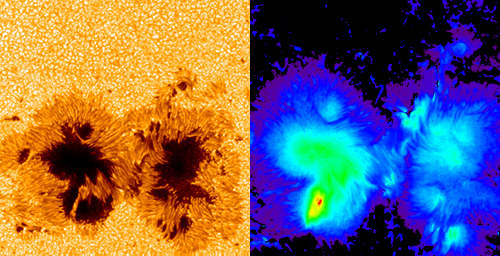
| Results | All the three scientific instruments have been acquiring image data with supreme performances never realized so far, such as high (0.2-0.3 arcsec) spatial resolution and precise magnetic-field measurement of SOT, which are expected to advance many of the solar physics researches significantly. From observations made in initial observing phase, several numbers of discoveries have been made, such as Alfven waves in the corona, unexpected dynamics in the chromosphere and photosphere, continuous outflowing plasma as a possible source of solar wind, and fine structures of magnetic field in sunspots and solar surface. They all help us to understand physical mechanisms of phenomena occurring in the solar atmosphere. Scientific results were featured as Hinode special issue in the U.S. “Science”, Japanese “Publications of the Astronomical Society of Japan”, and European “Astronomy & Astrophysics”. |